Maasai Mara Vs Serengeti: Which Safari Should You Actually Book?
The Maasai Mara and the Serengeti are the same plain with a border drawn across it. Choosing between them is really a choice about time, money and how many other vehicles you are prepared to share a sighting with. Here is the honest comparison.
Booking Choice: Compare actual routes before choosing the country: a short Mara trip, a conservancy-focused experience and a two-country circuit solve different planning problems. Explore Private Three-Day Mara Safari At Sopa Lodge
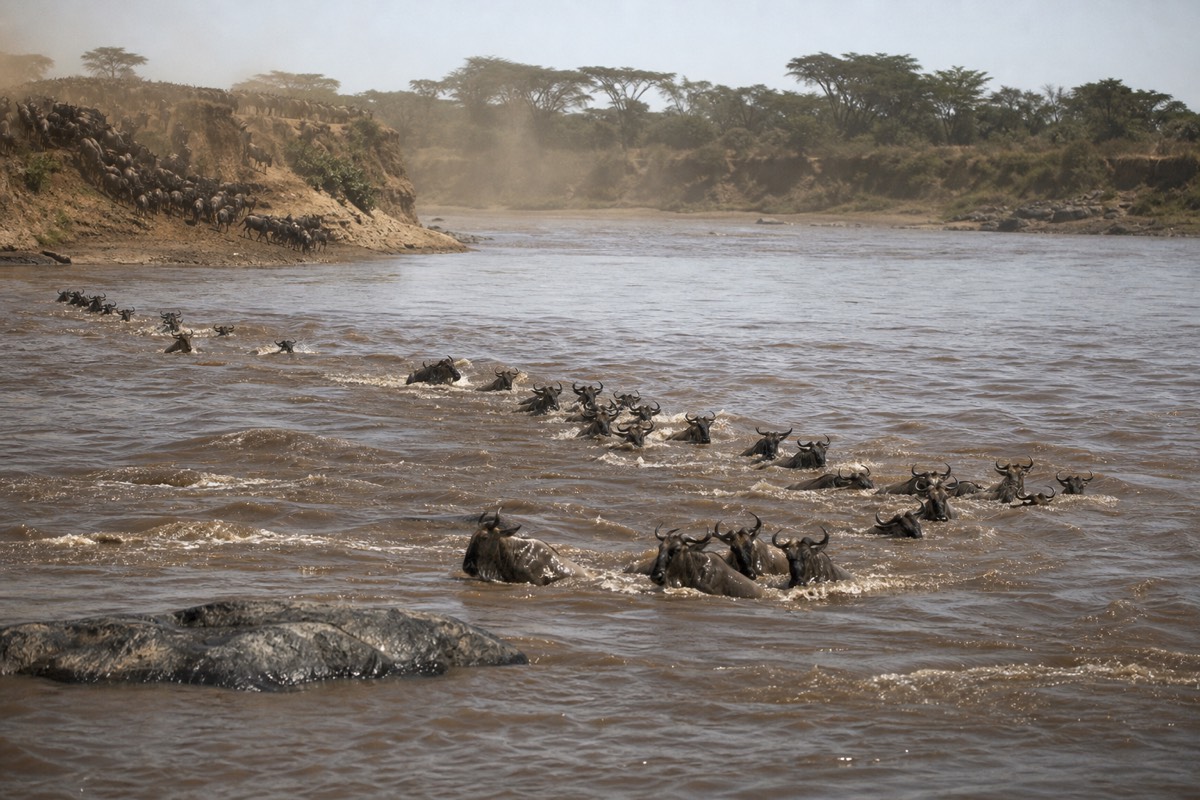
People frame this as a contest between two parks. It is not. The Maasai Mara and the Serengeti are one continuous grassland with an international border ruled across the middle of it, and the wildebeest that make both places famous walk over that border twice a year without noticing. The animals are the same animals. The grass is the same grass.
At A Glance: Three days suits a short Mara visit; the verified Kenya–Tanzania circuit takes eleven days and includes transfer days rather than eleven wildlife days. Explore Private Three-Day Mara Safari At Sopa Lodge
What differs is everything around the wildlife: how long it takes to get there, what the trip costs by the time it is finished, how many vehicles are at a sighting, what the rules allow, and which months put the herds in front of you. That is the real comparison, and it is the one below.
One ecosystem, two names, very different sizes
Areas are the figures used across this site: 1,510 km2 for the Maasai Mara National Reserve against 14,750 km2 for Serengeti National Park. Published Mara figures range up to about 1,672 km2 depending on whether adjoining conservancies are counted. Boxes are drawn to scale.
Maasai Mara Or Serengeti: What Is The Short Answer?
Take the Mara for a short trip, a first safari, a tighter budget, or a July to October migration window. Take the Serengeti for a longer trip, for herds outside those months, for the calving season, and for a bigger, emptier landscape. If you have four days and are flying into East Africa for the first time, the Mara wins on logistics alone.
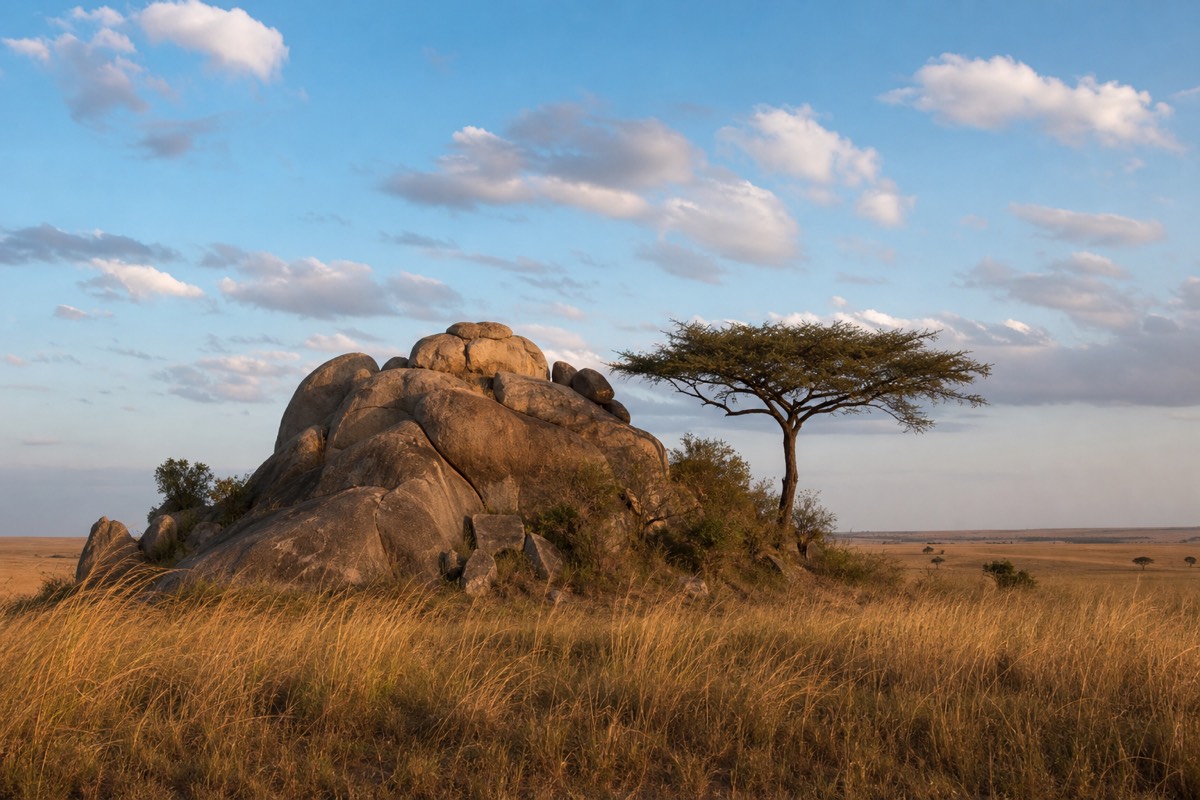
That is not a Kenyan patriotism answer. It falls out of the geography. The Mara is roughly 270 kilometres from Nairobi, a five to six hour drive or a 45-minute flight, and it packs a great deal of wildlife into 1,510 square kilometres. Serengeti National Park is 14,750 square kilometres, reached from Arusha rather than from an international hub, and the drive to its central plains takes most of a day. Density on one side, scale on the other.
| Factor | Maasai Mara, Kenya | Serengeti, Tanzania |
|---|---|---|
| Size | 1,510 km2 national reserve, plus surrounding private conservancies | 14,750 km2 national park, inside a far larger protected ecosystem |
| Gateway | Nairobi, with a major international airport | Arusha, reached via Kilimanjaro International or a connection |
| Ground journey | About 270 km, five to six hours | Most of a day to the central plains, longer to the north |
| Herd window | July to October, with the southbound return through October and November | Somewhere in the park nearly all year, in different regions by season |
| Wildlife density | Very high in a small area. Sightings come quickly | Lower per square kilometre. Long drives between sightings in places |
| Governance | County-run national reserve, plus community-owned conservancies with their own rules | National park under the national parks authority, alongside adjoining reserves |
| World Heritage status | Not listed | Listed by UNESCO in 1981 |
| Best suited to | Three to five days, first-timers, group and road safaris | Six days and up, repeat visitors, fly-in circuits |
Is Maasai Mara Better Than Serengeti?
Better for a short trip, for predator sightings per hour, and for reaching wildlife quickly from an international airport. Not better for scale, for solitude, for the calving season, or for seeing the migration outside July to October. Neither park is objectively superior. They are optimised for different trips.
The Mara's advantage is concentration. A high density of resident lion, cheetah and leopard in a comparatively small reserve means the gap between sightings is short, and a first-time visitor on a three-day trip will usually come home having seen a great deal. Our own Big Five guide for the Maasai Mara goes through what is realistic in that time. Cheetah in particular are unusually visible on the open Mara plains in daylight, which is not true everywhere in East Africa.
The Serengeti's advantage is space, and the kind of experience space produces. Kopjes rising out of grass that runs to the horizon in every direction. Long stretches where you see nobody. Migration stages the Mara never gets to host at all, including the calving in the south between January and March and the Grumeti crossings in June. If your mental image of a safari is emptiness, the Serengeti delivers it more completely.
The honest failure mode of each: the Mara can feel busy at a good sighting in August, and the Serengeti can feel slow if you are unlucky with a short trip in the wrong region. Both are fixable with planning rather than with money.
Which Is Cheaper, Serengeti Or Masai Mara?
The Mara, in almost every realistic version of the comparison, and the reason is trip structure rather than daily rates. Kenya has a deep market of road-based group safaris running out of Nairobi from a few hundred dollars, while a Serengeti trip typically needs more days, more internal flights and more transfers before it works at all.
Compare like with like and the daily numbers are closer than people expect. What separates them is what a finished trip looks like. A three-day Mara group safari from Nairobi, with transport, park fees, camp and meals included, starts around $209 per person on the listings we work with, because the drive out is short enough for that model to exist. There is no equivalent product for the Serengeti, because you cannot build a viable three-day road safari to a park that takes the better part of a day to reach from Arusha, which itself is a connection away from most international arrivals.
Park fees on both sides are set by government and change, and they are one of the places we would rather give you a method than a stale figure. Our own season research puts non-resident Mara entry at $100 per adult per day in the low season and $200 in the peak, on 2025 rates, and the site's tour pricing table folds a per-person daily reserve fee into every itinerary listed. Tanzanian park fees are set separately, are subject to VAT, and have risen repeatedly. Treat every fee number you read anywhere, including ours, as a planning allowance to be confirmed against the live listing or the park authority before you commit.
| Cost driver | Maasai Mara | Serengeti | Which way it pushes |
|---|---|---|---|
| Minimum viable trip | Three days, road, from Nairobi | Realistically six days or more | Strongly toward the Mara on total spend |
| Getting there | Five to six hour drive, or a 45-minute flight from Wilson Airport | Long drive from Arusha, or internal flights on most itineraries | Toward the Mara |
| Park entry | Set by the county. Our season pages use $100 low season and $200 peak per non-resident adult per day, 2025 rates | Set by the national parks authority, plus VAT. Confirm the current schedule before booking | Comparable in principle, seasonal in Kenya |
| Group and budget product | Deep market of shared road safaris out of Nairobi | Thinner. Most product is mid-range and up | Strongly toward the Mara |
| Conservancy or concession fee | $60 to $130 per person per day if you stay outside the reserve | Concession fees apply on private land here too | Roughly even |
| Internal flights | Optional. Many travellers drive | Common, sometimes unavoidable on a short itinerary | Toward the Mara |
If you want the Kenyan side of that broken down properly, our page on what a Maasai Mara safari really costs separates the package price from the extras that sit outside it, and the budget camps guide covers the cheap end honestly.
Are They Actually The Same Place?
Ecologically, yes. The Maasai Mara is the northern extension of the Serengeti ecosystem, one continuous system of grassland, riverine forest and escarpment that the Kenya and Tanzania border cuts across. The Mara River runs through both. Nothing on the ground marks the boundary except a gate.
The practical consequence of that is worth sitting with, because it explains most of the confusion travellers arrive with. When people say the migration "arrives in Kenya", nothing has arrived from elsewhere. A herd has walked north across a line on a map and into a differently administered part of the same plain. The Mara River crossings that make the Kenyan side famous also happen on the Tanzanian side, in the northern Serengeti around Kogatende, on the same river in the same months.
What changes at the border is administration, not habitat. Different fee schedules, different vehicle rules, different gate hours, different guiding cultures, different pricing. Our page on the Great Migration in the Maasai Mara follows the annual loop stage by stage if you want the full circuit.
Where Are The Herds In Any Given Month?
Roughly: southern Serengeti for calving from January to March, west and north through the Serengeti from April to June with the Grumeti crossings, into the Mara from about July, the Mara and northern Serengeti through September and October, then back south through November and December. Rain drives it, so every date is approximate.
The variability is the part that ruins trips when people ignore it. Herds have arrived in the Mara three weeks early in some years and lingered in the northern Serengeti far longer in others. Crossings can happen four times in a day or not at all for a week. Our homepage puts it about as bluntly as it can be put: plan for the migration, then do not let it be the only reason you came, because the resident wildlife is extraordinary regardless.
| Months | Where the herds generally are | Which country that favours |
|---|---|---|
| January to March | Southern Serengeti and the Ndutu plains, calving | Tanzania, decisively |
| April to May | Moving west and north through the Serengeti, in the long rains | Tanzania, but the wettest months of the year |
| June | Western corridor, Grumeti River crossings | Tanzania |
| July to August | Arriving in the Mara, first Mara River crossings | Kenya, with the northern Serengeti as the alternative |
| September to October | Spread across the Mara and the northern Serengeti | Either, and the Mara at its busiest |
| November to December | Drifting south again with the short rains | Tanzania by year end |
Two months deserve a warning rather than a recommendation. April is the peak of the long rains, with our season research putting it around 121 millimetres across roughly 22 rainy days, some tracks impassable and several camps closed. It is cheap for a reason. Our month-by-month Maasai Mara guide works through each one in turn.
How Do You Actually Get To Each One?
The Mara is a day's travel from a major international airport. The Serengeti is a day's travel from a regional one, which is itself a connection away from most long-haul arrivals. That single difference decides more short-trip bookings than any wildlife argument.
For Kenya: land at Nairobi's international airport, then either drive roughly 270 kilometres over five to six hours through the Rift Valley, or transfer to Wilson Airport for a 45-minute flight into an airstrip in or near the reserve. Scheduled carriers run several times daily, and the flight lands you straight into game-drive country. Our page on getting from Nairobi to the Maasai Mara compares the two on cost and on hours lost.
For Tanzania: most travellers route through Kilimanjaro International to Arusha, then either drive to the Serengeti over the better part of a day, usually with the Ngorongoro Crater on the way, or fly into an airstrip in the park. The drive is scenic and long. The flight is efficient and adds cost.
Entry paperwork differs too. Kenya operates an electronic travel authorisation applied for online before departure, and Tanzania has its own separate e-visa system. Neither is difficult; both must be done in advance, and doing both for a two-country trip is two applications, not one.
| Maasai Mara | Serengeti | |
|---|---|---|
| Main international arrival | Nairobi | Kilimanjaro International, usually via a connection |
| Onward by road | Five to six hours, about 270 km | Most of a day from Arusha to the central plains |
| Onward by air | 45 minutes from Wilson Airport | Roughly an hour and a half to Seronera on a light aircraft |
| Baggage on light aircraft | Around 15 kg per person, soft bags only | Similar restrictions apply |
| Typical stop on the way | Great Rift Valley viewpoint, Narok | Ngorongoro Crater, Lake Manyara |
| Realistic minimum stay | Two nights, three is better | Three nights inside a longer circuit |
How Crowded Does Each One Feel?
The Mara is busier per square kilometre and much busier at a good sighting in peak season. The Serengeti spreads the same number of visitors across nearly ten times the area. The Mara's answer to this is the ring of private conservancies around the reserve, where vehicle numbers at a sighting are capped by contract.
A big cat sighting in the Mara in August can gather twenty vehicles or more, especially in the accessible eastern areas near the main gates. That is the price of density and short access. It is also avoidable in two ways: go west into the Mara Triangle, which is separately managed and consistently quieter, or stay in a conservancy where a handful of camps hold exclusive traversing rights and the cap on vehicles at a sighting is enforced.
Conservancies also allow three things the national reserve does not: night drives, walking safaris and off-road driving. That combination is the strongest structural argument for the Kenyan side that has nothing to do with the migration, and we cover it in detail in our guide to the Mara Triangle and the private conservancies. Tanzania has private concessions with comparable rules, so this is a difference of degree rather than of kind.
Which One Suits The Trip You Can Actually Take?
Under five days, take the Mara. Six to ten days, either works, and the Serengeti starts making sense inside a northern-circuit itinerary. Two weeks, do both, or do one properly and add a coast or a second Kenyan park rather than rushing a border crossing.
| You are | Book | Why |
|---|---|---|
| On a first safari with three or four days | Maasai Mara | Short access, high density, a deep market of ready-made itineraries |
| Travelling on a tight budget | Maasai Mara | Shared road safaris from Nairobi have no Serengeti equivalent |
| Chasing river crossings | Maasai Mara in July to October, or northern Serengeti in the same window | Same river, same months, different side of the border |
| Chasing the calving season | Serengeti | January to March in the south. The Mara never hosts this stage |
| A photographer wanting time and space | Either, with a longer stay | Reach and patience matter more than the park. A dedicated itinerary earns its keep |
| Travelling with young children | Maasai Mara | Shorter transfers, more family-configured camps, quicker sightings |
| A repeat visitor who found the Mara busy | Serengeti, or a Mara conservancy | Both solve the crowding problem, one is much cheaper to reach |
| Combining safari with a beach week | Maasai Mara | The Kenyan coast connects easily through Nairobi |
If you fall in the first three rows, the practical next step is to compare the ready-made Kenyan itineraries rather than to keep comparing countries. The three and four-day group safaris from Nairobi listed by Maasai Mara Safari Tours are built around exactly this trip length, and our page on how long you actually need in the Mara is the honest version of the time question. A photographer with a longer window should look instead at the ten-day Maasai Mara photographer safari, which is built around light rather than around a fixed route.
What Else Does Each Country Put On The Same Trip?
Neither park is ever booked alone. In Kenya the Mara usually sits in a circuit with Lake Nakuru, Lake Naivasha and Amboseli, all reachable by road from Nairobi. In Tanzania the Serengeti sits inside the northern circuit with Ngorongoro, Tarangire and Lake Manyara. The supporting cast matters more than most comparisons admit.
This is where the Kenyan side quietly wins on variety per travel hour. Amboseli puts elephant herds under Kilimanjaro, which is the mountain's best viewpoint from either country and slightly absurd given the mountain is Tanzanian. Nakuru is a rhino stronghold with flamingo flocks and a completely different habitat from open savannah. Naivasha adds hippos, a freshwater lake and Hell's Gate, one of very few places in Kenya where you can walk or cycle among plains game. All three connect to the Mara by road inside a week.
Tanzania's northern circuit answers with the Ngorongoro Crater, which is a genuinely singular place: a collapsed caldera holding a resident population inside its walls, with black rhino and some of the densest wildlife viewing in Africa in a confined space. Tarangire delivers baobabs and very large elephant numbers in the dry months. Both are on the road between Arusha and the Serengeti, which is why a Tanzanian itinerary that looks long on paper is usually doing several things at once.
| Country | What travels with the headline park | What it adds | Extra travel |
|---|---|---|---|
| Kenya | Lake Nakuru | Black and white rhino, flamingos, 450 plus bird species | Half a day by road from the Mara |
| Kenya | Lake Naivasha and Hell's Gate | Hippos, boat trips, and walking or cycling among plains game | On the route between Nairobi and the Mara |
| Kenya | Amboseli | Large elephant herds with Kilimanjaro behind them | A long road day, or a short internal flight |
| Kenya | Ol Pejeta, Laikipia | Black rhino sanctuary and the last northern white rhinos, doable as a day trip from Nairobi | Separate from the Mara circuit |
| Tanzania | Ngorongoro Crater | A caldera with resident wildlife including black rhino, very high density | On the road to the Serengeti |
| Tanzania | Tarangire | Baobabs and big dry-season elephant concentrations | On the road from Arusha |
| Tanzania | Lake Manyara | Groundwater forest, tree-climbing lions, flamingos | On the same road |
| Both | A beach week afterwards | The Kenyan coast via Nairobi, or Zanzibar via Dar or Arusha | One internal flight either way |
What Are The Vehicle And Guiding Differences?
Kenya's budget end runs pop-top minivans and its better product runs open-roof Land Cruisers with six seats. Tanzania standardises more heavily on extended Land Cruisers. The vehicle you sit in affects your safari more than the park you sit in, and it is the variable most travellers do not check before booking.
Our own homepage is direct about this and it is the single most useful piece of Kenyan booking advice we can pass on. Shared minivans are legal safari transport and they reach the animals, but they carry more passengers, they have fixed roof hatches rather than a full open top, and they are less suited to off-road tracking where that is permitted. A six-seat open-roof Land Cruiser gives every seat an unobstructed sightline and can position for a moving animal. During the July to October window, when crossings draw photographers from everywhere, that difference is the gap between a front-row and a back-row view of the same event.
| Variable | Kenya, budget tier | Kenya, better tier | Tanzania, typical |
|---|---|---|---|
| Vehicle | Pop-top minivan, fixed roof hatch | Open-roof 4x4 Land Cruiser | Extended Land Cruiser, open or pop-top roof |
| Passengers | Up to seven, seats raised to reach the hatch | Maximum six, every seat on the window | Typically six or seven |
| Off-road capability | Limited | Good, where the rules permit it | Good |
| Guide model | Driver-guide, quality varies | Driver-guide with resident knowledge and a radio network | Driver-guide, with a strong national certification culture |
| Radio network between vehicles | Patchy | Strong. This is how sightings are found at dawn | Strong |
| What to ask before booking | Vehicle type, passenger count, roof type | Same three questions | Same three questions |
Can You Do Both In One Trip?
Yes, and the good version takes at least ten days. The bad version burns two of your days on border formalities and transfers to say you did. If you have under a week, pick one country and go deeper rather than crossing for the sake of the stamp.
There are two normal ways to link them. The overland route crosses at a road border and continues by vehicle, which is the cheaper option and costs you the better part of a day in each direction. The fly-in route connects light aircraft between the Mara and a Serengeti airstrip, which is faster, more expensive, and still involves immigration formalities at the airstrip. Either way you are entering a second country, so plan on separate entry authorisation for each and carry the paperwork for both.
The alternative that more travellers end up preferring is to stay in Kenya and use the saved days on a second and third landscape instead. The seven-day Kenya safari through the Mara, Nakuru, Naivasha and Amboseli is that idea in a single itinerary: big cats on the Mara plains, flamingos and rhino at Nakuru, and elephant herds under Kilimanjaro at Amboseli, which is arguably the best view of that mountain available from either country. The four-day Mara and Nakuru group safari is the compressed version for a shorter window.
What Each One Has That The Other Simply Does Not
The Serengeti has the calving grounds, the Grumeti crossings, a World Heritage listing from 1981, and a scale the Mara cannot reproduce. The Mara has the community conservancy model, night drives and walking within reach of a major international hub, and the shortest distance in East Africa between an airport and a lion.
The conservancy point is the one most comparisons miss. The land around the Maasai Mara is not state-owned park; it is Maasai family title, pooled into leased conservancies with capped bed numbers and enforced vehicle limits, with lease payments going directly to landowning households. The umbrella body reports 24 such conservancies covering 178,668 acres and involving 16,530 families. That produces both a low-density safari experience and a distribution of tourism income that most protected areas anywhere cannot match, and it is a genuinely different model rather than a marketing line. The background sits in our guide to Maasai culture and village life.
On the Tanzanian side, the thing that stays with people is the emptiness. Driving for an hour on the southern plains in February with nothing in view but grass, sky and a few hundred thousand animals is an experience the Mara's compact geography cannot offer. Neither park is the better safari. One is the better answer to a short trip and a first visit; the other is the better answer to a long one. Work out which trip you are actually taking, then book that.