How Many Days Do You Need In Maasai Mara?
How long for Maasai Mara? Three nights works, but four to five is the sweet spot for river crossings and relaxed game drives.
Booking Choice: Count camp nights and full game-drive days separately. The options below distinguish a shorter fly-in trip from a three-night Mara-only stay. Explore 4 Days Masai Mara National Reserve Luxury Lodge Safari
Last updated: March 11, 2026
| Minimum Recommended | 3 nights / 4 days (6-7 game drives) |
| Ideal for Most Travelers | 4-5 nights / 5-6 days (8-10 game drives) |
| For River Crossings | 4-5 nights minimum (crossings unpredictable) |
| Game Drive Schedule | Morning 6:30-9:30 AM, Afternoon 3:30-6:30 PM |
| Full Day Drive Duration | 8-12 hours with picnic lunch in reserve |
| Travel Time from Nairobi | 5-6 hours by road, 45 minutes by air |
Explore 4 Days Masai Mara National Reserve Luxury Lodge Safari
How Many Days Should You Spend In Maasai Mara?
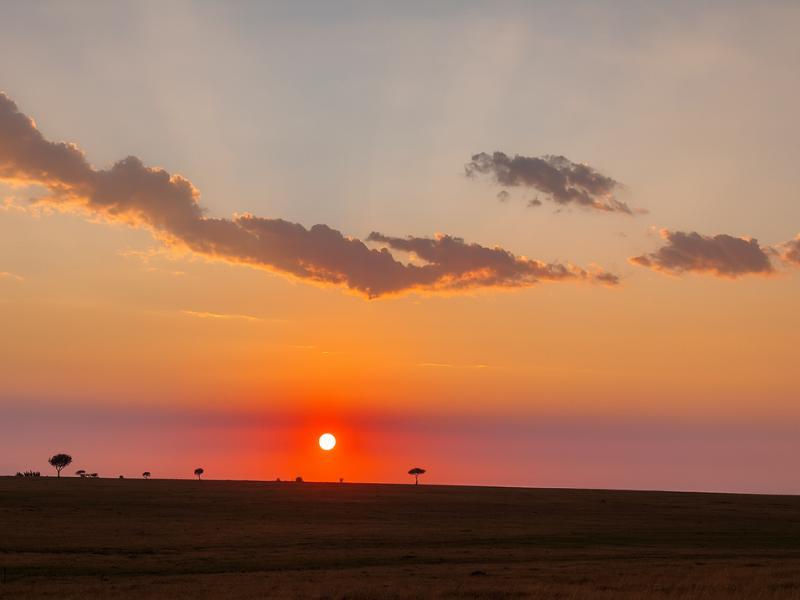 Four nights is the minimum we recommend for a satisfying Maasai Mara safari. This gives you three full days of game drives, enough time to explore different sections of the reserve, and flexibility if weather or wildlife movements affect one day. Three nights works if you’re on a tight schedule and fly in, but you’ll feel rushed. Five to six nights is ideal for migration season when river crossings require patience and multiple attempts.
The days versus nights language confuses people constantly. When you book a safari, the industry counts nights, not days. A “3 night safari” means you arrive afternoon of day one, have two full days in the middle, and depart morning of day four. That’s three nights in camp but only 2.5 actual safari days. If you’re driving from Nairobi, you lose most of arrival and departure days to travel.
Here’s what actually happens on a typical 4 night / 5 day road safari from Nairobi. Day one: leave Nairobi 7:30 AM, drive 5 to 6 hours with stops, arrive at camp around 2 PM, quick lunch, afternoon game drive 3:30 to 6:30 PM. Days two through four: full days with morning and afternoon drives, or optional full day drives with picnic lunch. Day five: early morning drive, breakfast, depart by 9 AM (park rules require exit before 10 AM on checkout day), drive back to Nairobi, arrive mid-afternoon.
That structure delivers 7 to 8 game drives if you do morning and afternoon splits, or 5 to 6 if you opt for full day drives. Seven to eight drives is enough to cover the main areas of the reserve, see varied wildlife behavior at different times of day, and have backup options if one drive disappoints.
If you fly in instead of driving, you reclaim those travel days. A 3 night fly-in safari becomes genuinely useful because you arrive at the airstrip around 11 AM on day one, game drive that afternoon, have two full days, then morning drive on departure day before the afternoon flight out. That’s 6 solid drives, comparable to a 4 night road safari.
Our team at Maasai Mara Safari Tours handles the logistics whether you’re driving or flying, and we’ll tell you honestly whether your proposed length makes sense for what you want to see.
We’ve mapped out getting from Nairobi to Maasai Mara because the transport decision affects your budget, your time, and how exhausted you’ll be when you arrive.
What Can You Realistically See In 2 Days Vs 3 Days Vs 5 Days?
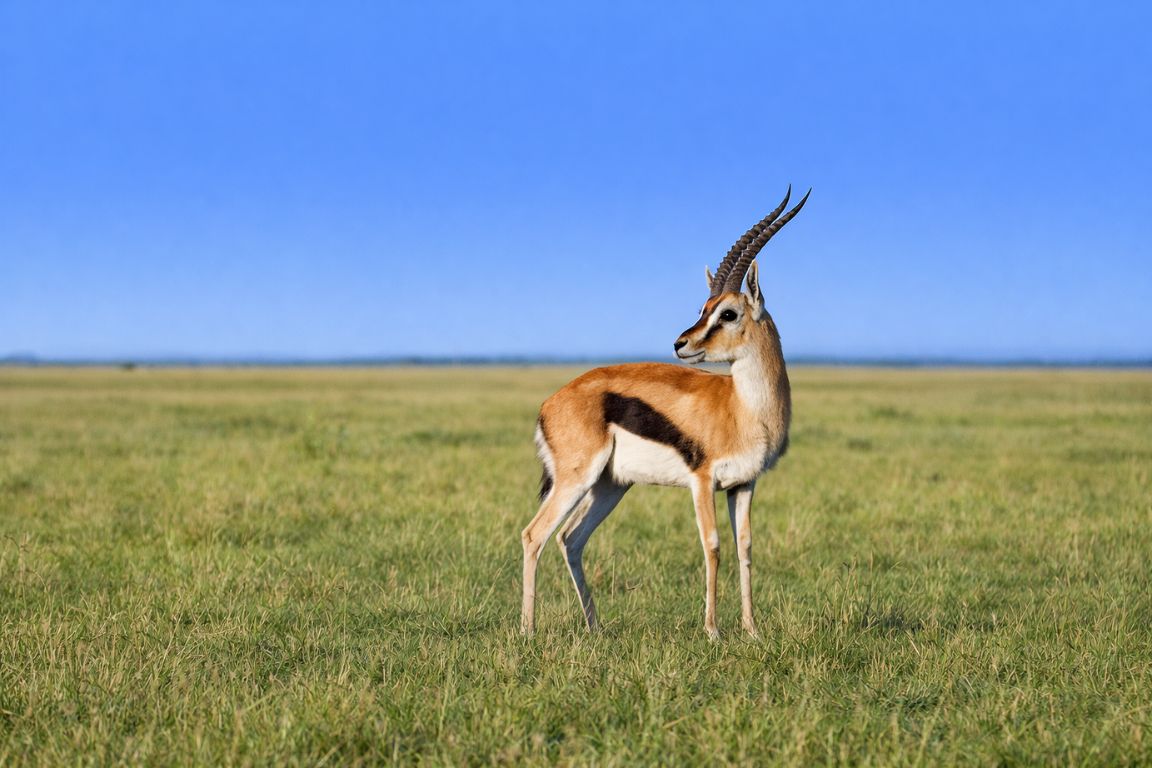 Two nights (4 drives): You’ll likely see lions, elephants, giraffes, zebras, wildebeest, and plains game, but you’re racing the clock. Three nights (6-7 drives): Adds cheetahs, possibly leopards, diverse habitats, and better predator behavior observation. Five nights (10+ drives): Covers all major areas, increases chances of rare sightings like rhinos or wild dogs, and allows time for full day expeditions to remote sections. Each additional night improves your odds exponentially, not linearly.
The Big Five is the checklist everyone brings, and two nights can technically deliver it if conditions cooperate. Lions are almost guaranteed, you’ll see elephants and buffalo most drives, leopards require luck but are possible, rhinos are the wildcard because Maasai Mara’s population is small and they stick to specific areas. On a two night safari, if you don’t see rhinos or leopards, you’re out of time.
Want to know what to look for? Our guide on the Big Five in Maasai Mara safari covers where each animal hangs out and when you’re most likely to spot them.
Three nights gives you breathing room. If day one is slow, you have day two and three to compensate. Guides can adjust strategy based on what you’ve already seen. Miss leopards on the first two days? Day three focuses on riverine forest areas where they hunt. Looking for cheetahs? Head to open plains in the Mara Triangle where they have running room.
Five nights is when the safari shifts from checklist to immersion. You stop worrying about the Big Five and start noticing behavior. A lion pride coordinating a hunt. Elephants teaching calves how to use their trunks at a waterhole. A cheetah mother with cubs practicing stalking techniques on Thomson’s gazelles. The difference between seeing animals and understanding animals becomes clear around day four.
| 2 Nights / 3 Days | 4 drives (road) or 5 drives (fly-in) | Lions, elephants, plains game guaranteed. Possible leopards. Unlikely rhinos. Rushed pace, limited flexibility. | Budget travelers, tight schedules, second-time visitors doing quick return |
| 3 Nights / 4 Days | 6-7 drives | Big Five strong possibility, good predator sightings, multiple habitat types, one backup day if weather bad | First-time safari goers on standard itineraries, balanced schedule |
| 4-5 Nights / 5-6 Days | 8-10 drives | Big Five likely, cheetahs and leopards probable, diverse behaviors observed, river crossing attempts viable during migration, remote area access | Photographers, wildlife enthusiasts, migration season visitors, anyone wanting depth |
| 6-7 Nights / 7-8 Days | 12-14 drives | Comprehensive coverage, multiple river crossing attempts, rare species possible (wild dogs, caracals), behavioral immersion, time for walking safaris and night drives in conservancies | Serious photographers, return visitors, multi-camp itineraries, conservation enthusiasts |
The other factor nobody mentions: fatigue. Game drives start before sunrise, you’re in a vehicle for 3 to 12 hours depending on format, and the sensory input is overwhelming. By day five, some travelers are genuinely tired and appreciate a rest day or shorter drives. Others are energized and want more. There’s no shame in admitting four nights is your limit if you’re not accustomed to early mornings and long days outdoors.
Not sure how to structure your time? Check out our 3-Day Maasai Mara safari tours itinerary – it covers everything from arrival to departure with realistic timing.
Does Staying Longer Increase Your Chances Of Seeing River Crossings?
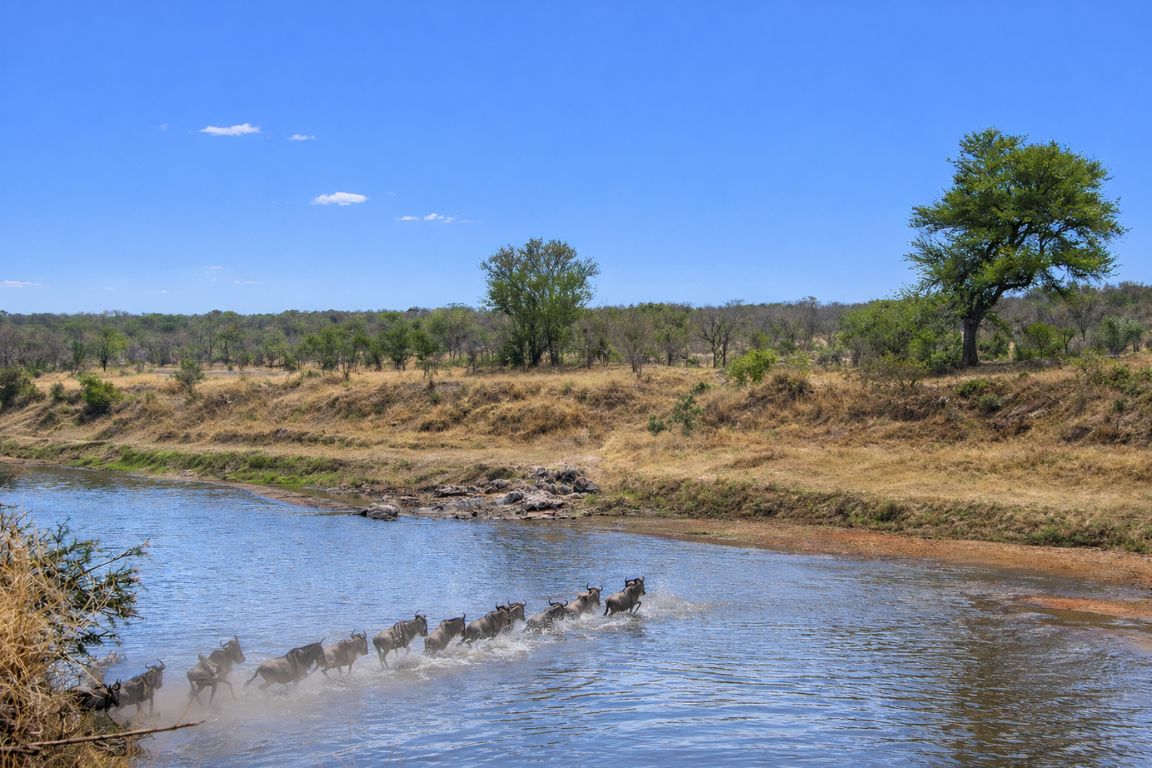 Yes, dramatically. River crossings are unpredictable even during peak migration season. The herds can stand at the riverbank for hours or days before one animal triggers the crossing. Some travelers witness crossings within 15 minutes of arriving at a crossing point. Others wait four days and see nothing. If river crossings are non-negotiable for you, plan minimum four to five nights and accept that there are no guarantees.
The math is straightforward but brutal. During August and September when crossings are most frequent, they still don’t happen every day at every crossing point. The herds move between the Mara and Serengeti multiple times, crossing back and forth, but the timing is driven by factors we can’t predict: herd psychology, water levels, predator presence, weather, even wind direction.
Guides monitor crossing points via radio network, but even with that intelligence, you might drive an hour to a reported crossing only to have the herds turn away at the last minute. We’ve sat at crossing points from 7 AM to 2 PM with thousands of wildebeest pacing the banks, grunting, moving toward the water then retreating, and ultimately not crossing. Then the next morning they cross before breakfast and you’re 45 minutes away.
Four nights gives you eight potential drive sessions (morning and afternoon), which translates to maybe three or four serious attempts at crossing points if you dedicate significant time to them. Five nights pushes that to ten drive sessions and five or six attempts. The additional days compound your chances because guides learn the herd patterns over multiple days and can position you better.
Some camps near major crossing points (Governors, Rekero, camps along Sand River) allow you to basically camp at the river and wait. You do a full day drive, pack breakfast and lunch, stake out a spot at a crossing point, and just wait. Patience is the only strategy that works. If you only have three nights, you can’t afford to burn an entire day waiting at a river that might not deliver.
Overwhelmed by accommodation choices? Check out our breakdown of the best safari camps in Maasai Mara safari tours – location matters way more than most booking sites let on.
Should You Split Your Time Between The Reserve And Conservancies?
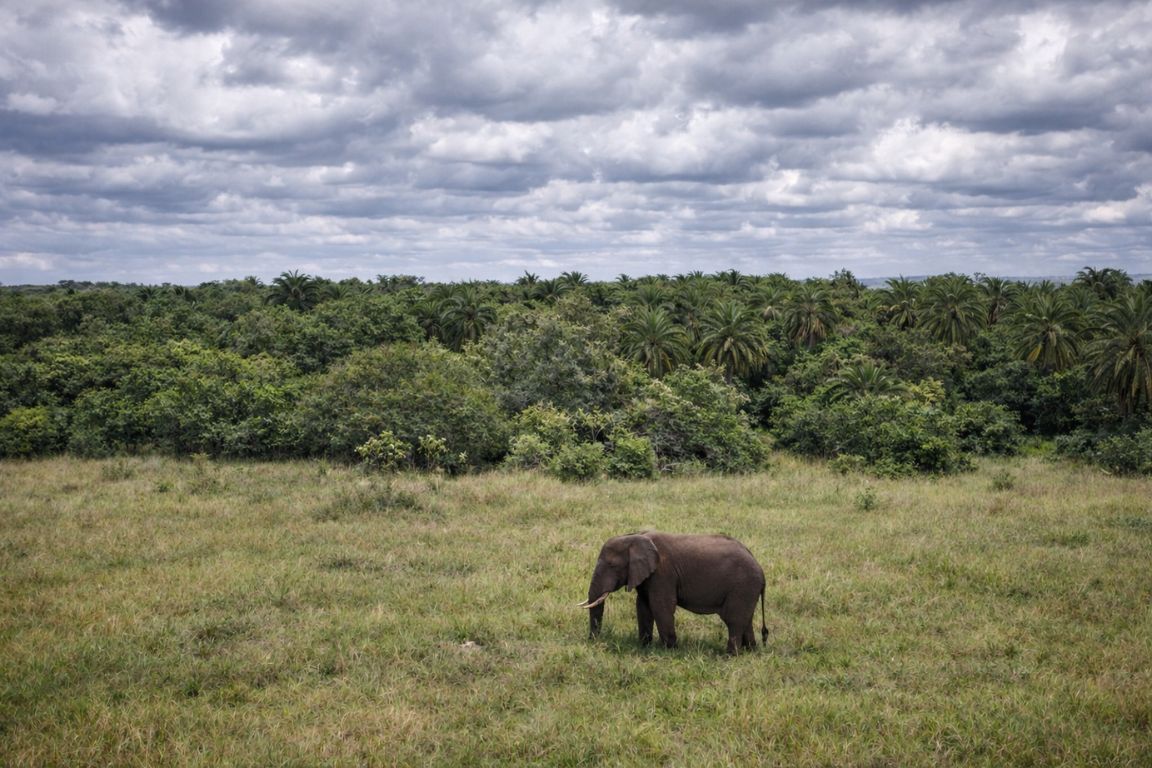 Yes, if you’re staying four nights or longer. Splitting between the main reserve and a private conservancy like Olare Motorogi, Naboisho, or Mara North gives you dramatically different experiences: high-density wildlife in the reserve versus exclusive sightings in conservancies, plus access to activities like walking safaris and night drives not permitted in the reserve. Ideal split for five nights: three in conservancy, two in reserve, or vice versa.
The main reserve is where the migration concentrates, where the classic river crossings happen, and where you get that documentary-style density of wildlife. But you also get 40 vehicles at a lion kill and queues at crossing points. Conservancies limit vehicle numbers strictly, usually five maximum per sighting, and some allow only their own camp vehicles so you never see another tourist.
Conservancies also run night drives, which reveal completely different species. Aardvarks, porcupines, honey badgers, genets, civets, all the nocturnal animals you’ll never see on daytime reserve drives. Walking safaris with Maasai guides teach you tracking, plant identification, the small details you miss from vehicles. If you spend your entire safari in the reserve, you’re missing half the Mara ecosystem.
The downside of splitting is packing and unpacking, losing half a day to the transfer between camps, and potentially missing a key sighting in one location while you’re in the other. For four nights, splitting 2-2 feels rushed. For five nights, 3-2 works well. For six or seven nights, definitely split, maybe even three locations: reserve, conservancy, Mara Triangle.
Budget matters here. Conservancy camps charge premium rates, often double what you’d pay in the main reserve. But if you can afford it, the tradeoff is worth it for the exclusivity and activity options.
How Many Game Drives Do You Actually Need?
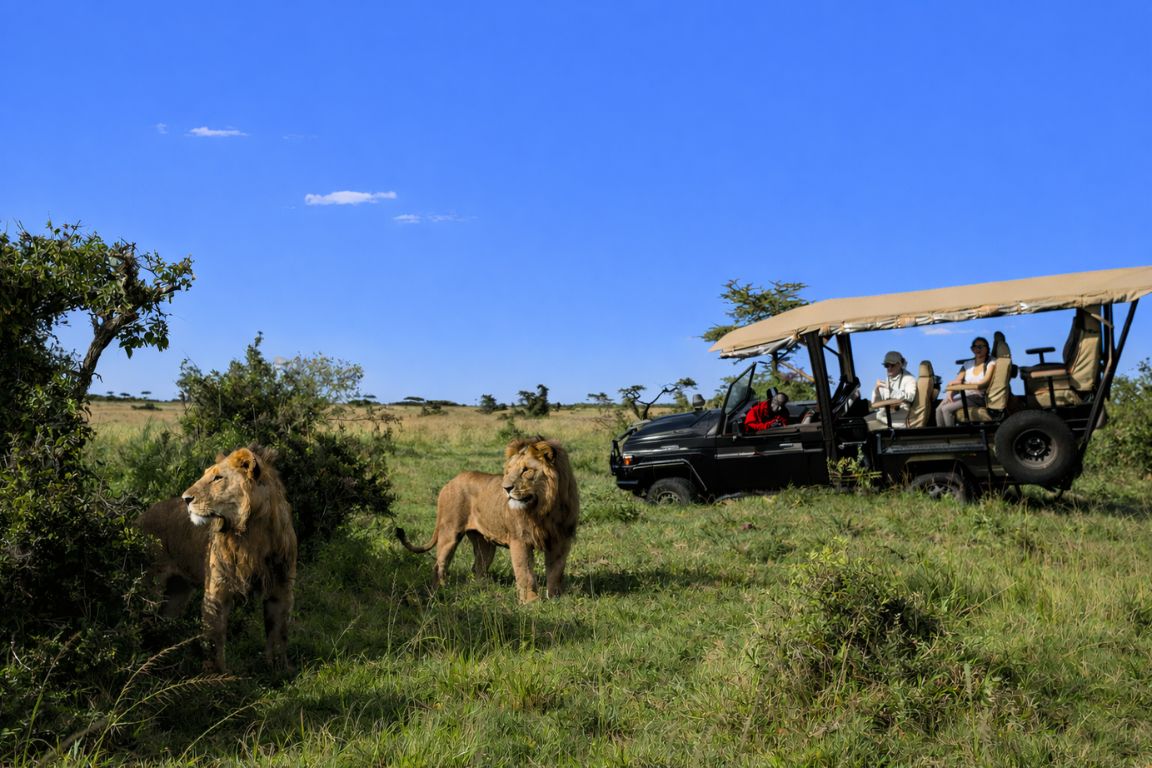 Six to eight drives covers the essential wildlife viewing for first-time visitors. Ten to twelve drives allows deeper exploration, behavioral observation, and better photography opportunities. Anything beyond fifteen drives means you’re either a photographer, a returnee seeking specific sightings, or you genuinely love the immersion and don’t mind repetition. The quality of drives matters more than raw quantity.
Not all drives are equal. A morning drive in peak season through the central reserve corridor where all the camps concentrate will show you wildlife but also 25 other vehicles doing the same loop. An afternoon drive in the Mara Triangle with a guide who knows where the resident leopard’s territory is will deliver intimate sightings with no other vehicles.
Full day drives are underrated. Most camps default to morning and afternoon drives with a long lunch break back at camp, which is comfortable but limits how far you can explore. A full day drive with a picnic breakfast and lunch in the bush lets you reach remote areas like the escarpment overlooking the Mara Triangle, the far eastern plains, or distant river crossings that are too far for half-day drives.
| Morning Game Drive | 6:30-9:30 AM (3 hours) | Predator hunting, active wildlife, best light for photography | Included in most packages |
| Afternoon Game Drive | 3:30-6:30 PM (3 hours) | Animals returning to water, golden hour photography, sunset views | Included in most packages |
| Full Day Game Drive | 6:30 AM-6:00 PM (8-11 hours) | Remote area access, river crossing attempts, comprehensive coverage, serious photography | Included or $50-100 vehicle fee |
| Night Game Drive | 6:30-9:00 PM (2-3 hours) | Nocturnal species, predators hunting, unique experience (conservancies only) | $50-80 per person |
Morning drives are non-negotiable. That 6:30 to 9:30 AM window is when predators are most active, when light is best, when the reserve feels wild before midday heat shuts everything down. If your schedule only allows a few drives total, make sure most of them are mornings.
Afternoon drives are more relaxed, better for landscapes and elephants and herbivores coming to water, but you’ll miss the hunting behavior and intense predator action. If you’re choosing between morning and afternoon, always take morning.
What’s The Risk Of Getting Bored If You Stay Too Long?
Four to six nights almost never feels repetitive if you have a good guide and vary your routes. Seven to ten nights can feel samey unless you split camps, add conservancy experiences, or have specific research or photography goals. The boredom threshold varies wildly by person: photographers can spend two weeks and want more, while some casual tourists feel done after three days once they’ve checked off the Big Five.
The people who get bored are usually the ones staying in one camp, doing the same morning and afternoon loop drives on the same tracks, seeing the same resident lion pride three days in a row. If your guide isn’t varying routes, if the camp isn’t offering full day options or night drives in conservancies, if you’re not curious about behavior beyond “I saw a lion,” then yes, five nights will feel long.
The people who never get bored are observing, not just looking. Watching a lion pride’s social dynamics unfold over multiple days. Tracking a leopard’s hunting territory and understanding why she chooses certain trees. Following a cheetah coalition and seeing how male coalitions divide hunting responsibilities. There’s a difference between collecting sightings and studying animals.
We’ve guided travelers who stayed nine nights and were planning their return trip before they left. We’ve also guided people who were ready to leave after three nights because they’d “seen everything.” The difference wasn’t the wildlife, it was the mindset.
If you suspect you might be in the “check the boxes and move on” category, stick to three or four nights. If you’re already thinking about what behaviors you want to observe or what photography shots you want to capture, plan five to seven nights and split camps.
Wondering what the extra day gets you? Our 4-Day Maasai Mara safari tours itinerary walks you through the logistics with more flexibility than shorter trips.
How Does Safari Length Affect Your Budget?
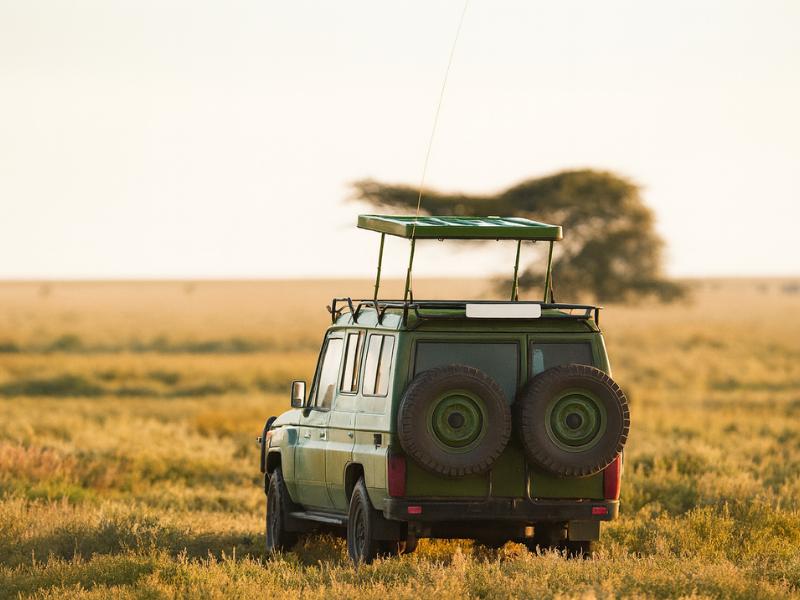
Each additional night adds $250 to $600 per person depending on accommodation level. Park fees double in high season, so a five night August safari costs $1,000 in park fees alone versus $500 for the same length in March. Longer safaris allow per-day cost spreading of fixed expenses like vehicle rental and guide fees, making five nights more cost-efficient per day than two nights, but the total outlay is obviously higher.
Budget safari breakdown for typical costs per person per night: camping $150 to $250, mid-range lodge $300 to $500, luxury camp $600 to $900, ultra-luxury conservancy $1,200 to $2,500. Those rates usually include accommodation, meals, and game drives. Park fees, flights, tips, and activities like balloon safaris are extra.
| 2 Nights / 3 Days | $750-1,200 | $1,500-2,200 | $3,000-5,500 |
| 3 Nights / 4 Days | $1,100-1,800 | $2,000-3,000 | $4,200-7,500 |
| 4 Nights / 5 Days | $1,500-2,400 | $2,500-4,000 | $5,500-10,000 |
| 5 Nights / 6 Days | $1,900-3,000 | $3,000-5,000 | $7,000-12,500 |
Estimates based on low season rates. High season (July-December) adds 50-100% to accommodation costs and doubles park fees. Prices include accommodation, meals, game drives, excludes park fees, flights, tips.
The cost jump from three to four nights feels steep, but the value jump is steeper. You’re not just adding one more night of accommodation, you’re adding two or three more game drives, access to full day options, and critical flexibility. Most travelers find the four night investment worth it compared to three.
If you’re torn between price tiers, here’s our honest comparison of budget vs luxury safari at Maasai Mara based on what each delivers for game viewing and overall experience.
Traveling as a couple or group reduces per-person costs significantly because vehicle and guide fees are shared. A private vehicle for a couple runs $150 to $300 per day depending on vehicle type and operator, so split between two people that’s $75 to $150 each. For four people, it drops to $37 to $75 per person. Park fees don’t scale with group size, but everything else does.
Flying versus driving affects budget differently than most people expect. Domestic flights Nairobi to Maasai Mara run $150 to $250 per person each way, so $300 to $500 round trip. Driving is “free” in that it’s included in most road safari packages, but you lose 10 to 12 hours of safari time to travel. For three night safaris, flying makes sense because you reclaim almost a full day. For five night safaris, the time loss matters less and driving saves money.
Not sure about the budget? I’ve got Maasai Mara safari costs explained so you know exactly what you’re paying for and where operators hide their markups.
Questions before you commit? Zara and the team answer them daily. Start here.
Should You Combine Maasai Mara With Other Parks?
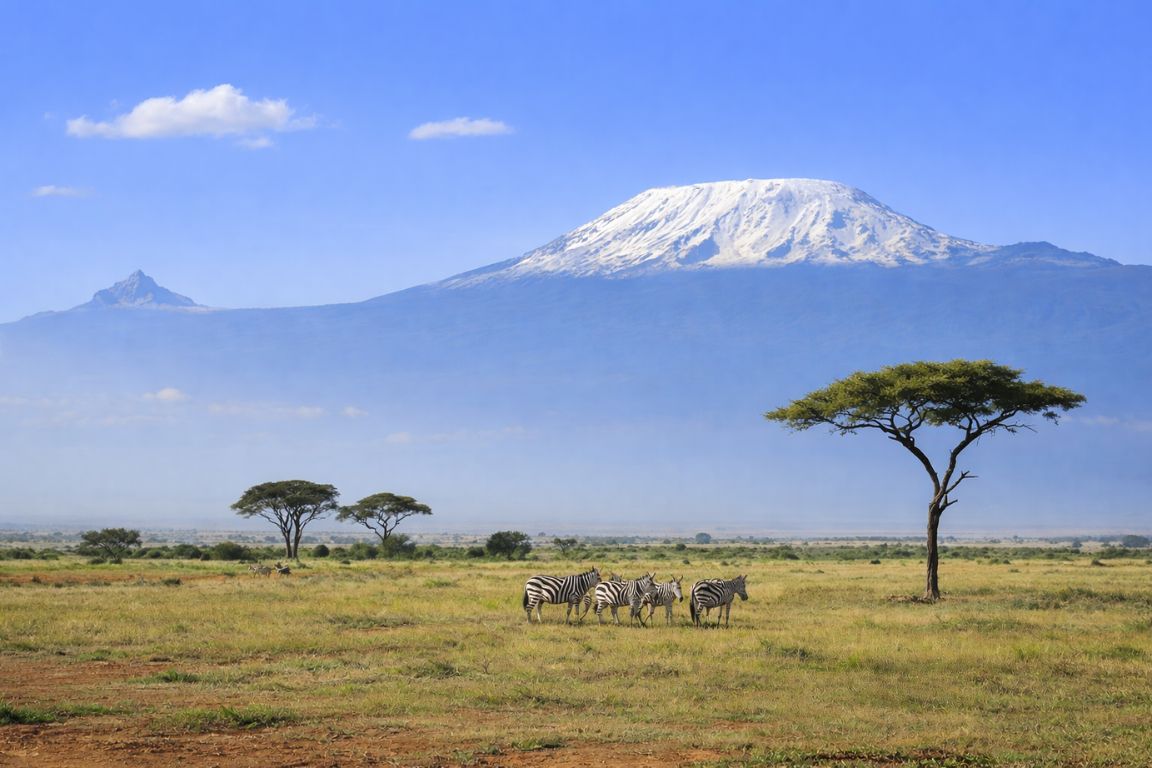 If you have 7 to 10 days total for your Kenya safari, splitting time between Maasai Mara and one other park makes sense. Common combinations: Mara plus Amboseli for elephants and Kilimanjaro views, Mara plus Lake Nakuru for flamingos and rhinos, Mara plus Samburu for northern species. Allocate at least three nights per destination, ideally four. Don’t try to cram three parks into seven days, you’ll spend more time driving than on game drives.
The classic Kenya safari circuit is Mara, Amboseli, and one of the Rift Valley lakes (Nakuru or Naivasha). That’s a 10 to 12 day itinerary done properly: four nights Mara, three nights Amboseli, two nights lake, one night Nairobi on either end. It covers different ecosystems, different species concentrations, and gives you the postcard Kilimanjaro backdrop at Amboseli.
Samburu is underrated. It’s 5 to 6 hours north of Nairobi in the opposite direction from Mara, so logistically you’re looking at a fly-in option or accepting two long drive days. But Samburu has the Special Five (Grevy’s zebra, reticulated giraffe, Somali ostrich, gerenuk, Beisa oryx) that you won’t see in Mara, plus different predator dynamics and drier landscape. Mara plus Samburu is a safari for people who’ve already done the classic circuit and want something different.
Lake Nakuru works well as a two night add-on between Nairobi and Mara. The flamingo concentrations fluctuate based on water levels and algae blooms, so they’re not guaranteed, but the rhino sanctuary is reliable and you’ll see both black and white rhinos in close proximity. It’s also on the route from Nairobi to Mara, so you’re not backtracking.
The mistake is trying to do too much. Mara two nights, Nakuru one night, Amboseli two nights in a six day trip means you spend more time packing and driving than observing wildlife. Every park deserves minimum three nights, four is better. If you only have a week total, choose Mara only or Mara plus one other park, not three parks.
What Length Do Our Travelers Actually Choose?
| 2 Nights | 8% | 3.6/5 | Budget constraints, tight schedule, extension to Tanzania safari |
| 3 Nights | 31% | 4.1/5 | Standard package length, first safari, balancing cost and experience |
| 4 Nights | 28% | 4.5/5 | Recommended by us, migration season river crossings, comfortable pace |
| 5-6 Nights | 24% | 4.7/5 | Photographers, split camp itineraries, serious wildlife enthusiasts |
| 7+ Nights | 9% | 4.8/5 | Return visitors, multi-park combinations, conservation work, extended photography projects |
Data based on 523 safari bookings we coordinated in 2025. Satisfaction ratings collected via post-safari survey.
That satisfaction rating difference is real. Two night safaris consistently score lower not because the wildlife is worse, but because travelers feel rushed and wish they’d stayed longer. Three nights hits the acceptable threshold. Four nights is where most people feel they got what they came for. Five to six nights is where people stop wishing for more time and start appreciating what they experienced.
The 7+ night category skews higher satisfaction because those travelers self-selected for length, they knew going in they wanted immersion. But notice it’s only 9% of bookings. Most people either can’t afford or don’t want to spend a full week in one location.
The three night and four night categories combined account for 59% of our bookings. That tells you the industry standard exists for a reason. It’s the length that balances cost, time off work, and wildlife experience for the majority of international travelers.
What Trips People Up When Choosing Safari Length
 The biggest mistake is booking two nights because it looks cheaper and convincing yourself it’ll be enough. It almost never is. Every two night traveler we’ve guided has said afterward they wished they’d booked at least one more night. The cost difference between two and three nights is maybe $400 per person, but the experience difference is huge.
Second mistake: not factoring in travel time when driving from Nairobi. That 5 to 6 hour drive each way eats a full day on either end. On a three night road safari, you only get 1.5 full safari days because arrival and departure are half days. People see “3 night safari” and picture three full days of game drives, then feel cheated when they realize the structure.
Third: booking migration season with only three nights and expecting to see river crossings. The odds are against you. Crossings are unpredictable, the herds might be in the northern Serengeti instead of the Mara during your specific dates, and even if they’re present, they might not cross during your limited window. Four nights minimum for migration, five is better.
Fourth: not asking about full day drive options when booking. Some camps automatically do morning and afternoon splits and charge extra for full day options. Others include full days as standard. If you’re paying for four nights, make sure you can actually do full day drives on at least some of those days, especially during migration season when reaching river crossings requires time.
Fifth: splitting camps without considering transfer logistics. Moving between camps sounds appealing, but the transfer itself can take 2 to 4 hours depending on distance and road conditions. You lose most of a safari day to packing, driving, and unpacking. Only split if you’re staying five nights or longer and the camps are strategically positioned.
If you’re feeling overwhelmed by all the decisions, here’s how to plan a Maasai Mara safari tours so you don’t waste time figuring out operators and park access on the fly.
If you’d rather hand the planning to someone who knows which lengths work for which goals, let us take care of yours. We’ve been doing this since 2012 and we’ll tell you honestly whether your proposed itinerary makes sense.
Frequently Asked Questions
Is 2 nights enough for Maasai Mara?
Two nights is the bare minimum and only works if you fly in and out, maximizing game drive time. You’ll get 4 to 5 drives, which is enough to see major wildlife but feels rushed and leaves no flexibility if weather or animal movements disappoint on one day. Most travelers regret not booking at least three nights. If budget is tight, consider visiting during low season when three nights costs the same as two nights in peak season.
Can you see the Great Migration in 3 days?
Yes, if the migration is actively present in the Mara during your dates (typically July through October). However, witnessing a river crossing in just three days is less certain because crossings are unpredictable. You might get lucky and see one immediately, or the herds might stand at the riverbank for days without crossing. Three nights gives you 6 to 7 drives, which allows a few dedicated attempts at crossing points but no guarantee.
What is a full day game drive?
A full day game drive runs 8 to 12 hours, typically departing camp around 6:30 AM and returning 5:00 to 6:00 PM. You carry picnic breakfast and lunch, eating in the bush at designated spots. This format allows access to remote areas too far for half-day drives, extended time at river crossing points, and more comprehensive reserve coverage. Most camps include full day options, though some charge $50 to $100 extra per vehicle.
How many game drives per day in Maasai Mara?
Standard schedule is two drives per day: morning (6:30-9:30 AM) and afternoon (3:30-6:30 PM), with return to camp for lunch and rest. Alternatively, you can do one full day drive covering both time slots with picnic meals. In private conservancies, you can add a third option: night drives after dinner (6:30-9:00 PM), which are not permitted in the main reserve.
Should I stay in one camp or split between multiple camps?
For three to four nights, stay in one camp to maximize game drive time and avoid transfer logistics. For five nights or longer, consider splitting 3-2 or 4-3 between a reserve camp and conservancy camp, or between different sections of the reserve. Splits work best when camps offer distinctly different experiences (main reserve versus conservancy, river location versus plains location) and when transfer time is under two hours.
Is flying to Maasai Mara worth the extra cost?
Flying makes sense for trips under five nights because it reclaims travel time. A three night fly-in safari delivers 6 solid game drives versus 4 to 5 on a road safari. Flights cost $300 to $500 per person round trip but save 10 to 12 hours of driving. For five night or longer safaris, driving becomes more economical because the time loss is proportionally smaller and you save significant money, especially for groups.
We’ve been coordinating these safaris for travelers since 2012. Let us take care of yours. We’ll match your available time to realistic expectations, book camps that suit your interests and budget, and structure your itinerary so you actually spend time on game drives instead of in transit.
Written by Zara Akinyi Omondi
Kenyan tour guide since 2012 · Founder, Maasai Mara Safari Tours
Zara has guided over 2,500 travelers through Maasai Mara and Kenya’s premier safari destinations since founding the agency.