Kenya Visa And Entry Requirements For Safari Travelers
Kenya moved its visitor paperwork online, which means the document you need now sits between you and the boarding gate rather than between you and the immigration desk. Here is what a US and a UK passport holder each have to do, in the order it has to happen.
Booking Choice: Keep entry paperwork separate from your safari booking. Once your trip dates are settled, compare an itinerary that names the transport and overnight stay you need to document. Explore Private Three-Day Mara Safari At Sopa Lodge
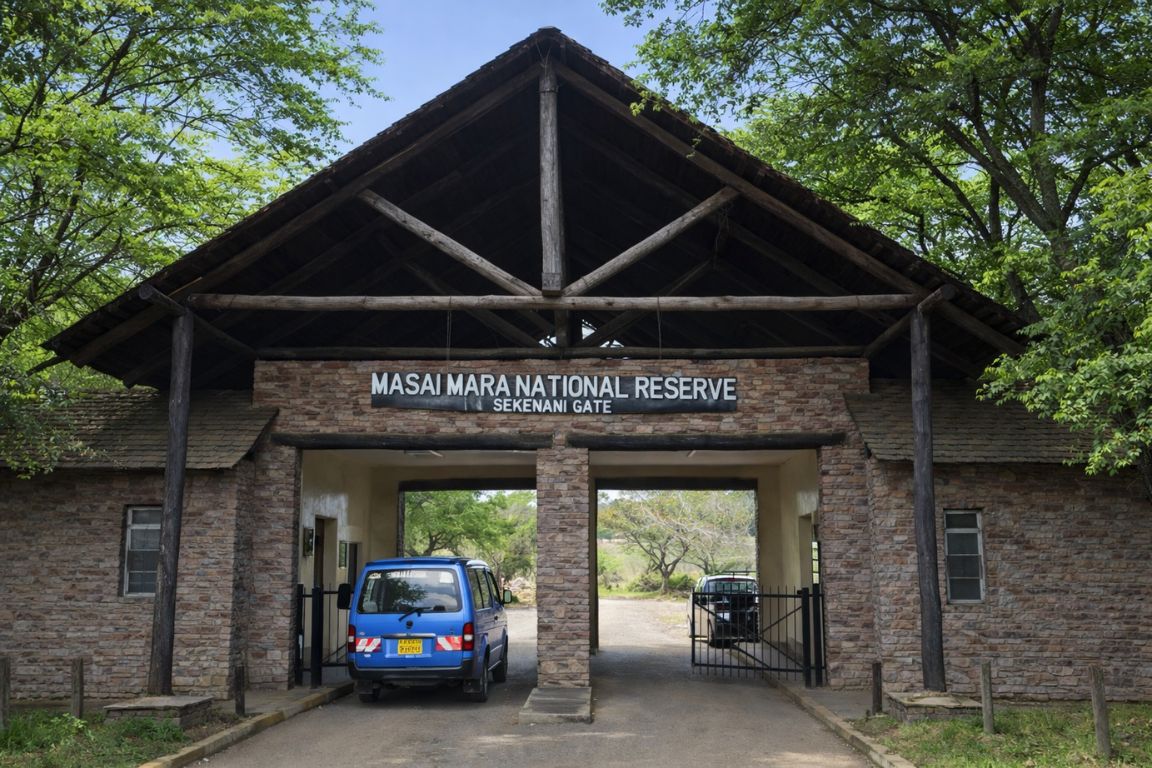
The safari itself is the easy part to picture. The part that quietly derails trips is a form, a card payment and a three-day wait that nobody budgeted for. Kenya moved its visitor paperwork online, and the system now sits between you and the boarding gate rather than between you and the immigration desk. That single change is what most outdated advice still gets wrong.
At A Glance: A Nairobi-return safari gives you a concrete trip to organize around; the operator must confirm accommodations, and no tour purchase replaces entry authorization. Explore Private Three-Day Mara Safari At Sopa Lodge
This guide is written for the two passports that ask about this most: American and British. The rules land in almost exactly the same place for both, but the assumptions travelers arrive with are very different, so both are spelled out rather than lumped together. Everything below traces to Kenya's own official portal and to the government travel-advice pages for each country.
The Kenya eTA, end to end
Standard eTA figures as published on Kenya's official portal, etakenya.go.ke. Fees and processing times are set by the Kenyan government and can change; confirm on the official site before you apply.
Do US And UK Passport Holders Need A Kenya Visa For A Safari?
Both do, in the form that matters now: an approved Kenya Electronic Travel Authorization, the eTA, held before boarding. Neither nationality is exempt, and neither can settle it at the airport in Nairobi. The standard eTA is $30, the application lives at etakenya.go.ke, and the official processing quote is three working days.

Americans tend to assume East Africa still runs on a stamp bought at arrivals. Britons tend to assume the Commonwealth connection buys some kind of shortcut. Neither is true. Kenya's official guidance puts US and UK citizens in exactly the same bucket: not exempt, not eligible for an on-arrival option, authorization obtained online in advance.
| Requirement | US passport holder | UK passport holder |
|---|---|---|
| Advance authorization | Kenya eTA, approved before you board | Kenya eTA, approved before you board |
| Exempt? | No | No |
| Available on arrival? | No | No |
| Standard fee | $30 USD | $30 USD |
| Where to apply | etakenya.go.ke | etakenya.go.ke |
| Official processing quote | 3 working days | 3 working days |
| Passport validity | 6 months beyond arrival, 1 blank page | 6 months beyond arrival, 1 blank page |
| Yellow fever certificate | Not required flying direct from the US | Not required flying direct from the UK |
| Length of stay | Decided by the officer at the point of entry | Decided by the officer at the point of entry |
One practical difference is worth flagging. The official eligibility page also lists special options beyond the standard single authorization, including multi-entry arrangements and a longer-validity option for US citizens. If your Kenya trip is the first of several, or you are hopping out to a neighboring country and back, read the official eligibility page before you pay for the standard version.
What Exactly Is The Kenya ETA, And What Does It Replace?
The eTA is an online travel authorization tied to your passport and your trip, approved before departure rather than on arrival. It is the current system, applied for only at etakenya.go.ke. Approval gives you a window to travel; it does not itself set how long you may stay, which is decided at the border.
The terminology is where people get lost, because older blog posts, forum threads and even some booking confirmations still describe an e-visa, a visa on arrival, or a sticker in the passport. As of 2026 the practical picture is simpler than any of that: one online application, one $30 standard fee, one approval to carry with you.
| What people still call it | What is actually true |
|---|---|
| "The Kenya e-visa" | The current system is the Electronic Travel Authorization, applied for at etakenya.go.ke |
| "You can buy it on arrival" | Not an option for US or UK passport holders; approval has to be in hand before you fly |
| "It's free for tourists" | The standard eTA fee is $30 USD |
| "Approval guarantees entry" | It authorizes travel; the immigration officer at the point of entry determines your length of stay |
| "One approval covers the whole year" | The standard approval is valid for travel within 90 days of issue; special multi-entry options are listed separately on the official site |
| "My agent handles it" | Plenty of third-party sites will handle it, and charge a service fee on top of the $30. The official portal is the only place that does not |
That last row is the one that costs real money. The single most common reported mistake is applying through an unofficial site that mirrors the government form and adds its own fee. The sites are not always obviously fake; several rank well and look institutional. The official application walkthrough is the reference point, and if the address bar does not say etakenya.go.ke, close the tab.
How Do You Apply For The Kenya ETA?
You create an account on the official portal, upload a passport photo page and a selfie or passport-style photo, enter contact details and your arrival and departure itinerary, attach your accommodation booking confirmation, and pay by card. The application is straightforward. Assembling the attachments before you start is what makes it fast.
The order matters more than it looks. Two of the required attachments depend on decisions you may not have made yet, which is why so many people open the form, stall halfway and come back to it a week later than they meant to.
| What the application asks for | Where safari travelers get stuck |
|---|---|
| Passport bio page | Nothing hard, but check the expiry date against the six-month rule before you upload anything |
| Selfie or passport-type photo | Plain background, no hat, no sunglasses. Take it before you start rather than mid-form |
| Email and phone contact | Use an address you will actually read on the road, not a work account you lose access to on leave |
| Arrival and departure itinerary | Needs your flights settled. If you are still comparing fares, that decision is now blocking your paperwork |
| Accommodation booking confirmation | The safari-specific trap. On a packaged trip your camps are booked by the operator, not by you, so you may have no confirmation in your own inbox. Ask for it in writing when you book |
| Payment card | A credit or debit card that works for international transactions. Cards with travel blocks enabled get declined |
That accommodation row is the reason we tell people to request written confirmation at the moment of booking rather than two weeks before departure. If your itinerary is a seven-day Kenya circuit through Nakuru, Naivasha and Amboseli, the camps change several times across the trip, and the document you need is the operator's confirmation covering the whole booking. Getting that early removes the single most common cause of a half-finished application.

When Should You Apply, And What Does The Timeline Look Like?
Apply once flights and camps are confirmed, and at least two to three weeks before departure. The official quote is three working days, and the guidance itself notes it can take longer. The approval is valid for travel within 90 days of issue, so applying very early is only a problem on trips booked further out than that.
The 90-day window is the constraint nobody reads carefully. It is generous for a normal holiday and awkward for the traveler who books a safari eleven months ahead and wants everything squared away in one weekend. If your departure is more than three months out, put a calendar reminder in the window rather than applying now and discovering the approval has aged out.
| Stage | What to do |
|---|---|
| Before you book anything | Check your passport expiry against the six-month rule. Renewals are the one item in this list you cannot rush cheaply |
| At the moment you book the safari | Ask the operator, in writing, for the accommodation confirmation covering every night of the trip |
| Once flights are ticketed | You now have the arrival and departure itinerary the form wants. Nothing is blocking the application |
| Two to three weeks out | Submit and pay. This is a planning allowance, not an official deadline: it simply leaves room if the three-day quote slips |
| Three working days later | Expect the decision by email. Check the spam folder before assuming silence means a problem |
| Before you leave home | Save the approval offline and print a copy. Phone batteries and airport wifi both fail at the worst moment |
Does Your Passport Actually Meet Kenya's Rules?
Kenya asks for a passport valid at least six months beyond your planned arrival date, with at least one blank page. Both halves matter. A passport that expires four months after your safari is a document that gets you turned away at check-in, not one that gets sorted out later at the desk.
Six months beyond arrival, not beyond departure, is the phrasing on the official guidance, and it is stricter than travelers assume. Work backwards from the date you land, not the date you fly home. British passports issued under the older rules sometimes carry odd expiry arithmetic from extra months added on renewal, which is exactly the sort of detail worth checking against the printed date rather than from memory.
| Check | The rule | Why it catches safari travelers |
|---|---|---|
| Expiry date | Valid for at least six months after your planned arrival date in Kenya | Long-haul trips get booked far ahead, and a passport that looked fine at booking can fall inside the window by departure |
| Blank pages | At least one blank page | East Africa trips that add a second or third country fill pages quickly |
| Name match | Booking names and passport names should agree | A planning allowance rather than a stated rule, but middle names dropped from a flight booking cause avoidable arguments at check-in |
Do You Need A Yellow Fever Certificate To Enter Kenya?
Only if you are arriving from, or transiting more than twelve hours in, a yellow fever risk country, and the requirement applies from age one upward. Flying direct from the United States or the United Kingdom does not trigger it. That entry rule is a separate question from whether the vaccine is medically recommended for you.
This is the single most confused item in Kenya trip planning, and the confusion runs in both directions. Some travelers turn up with a certificate they never needed. Others route through a West or Central African hub, sit there overnight, and discover the twelve-hour transit clock has quietly changed their obligations. The trigger is your route, not your nationality.
| Your route into Kenya | Certificate required at the border? |
|---|---|
| Direct from the United States | No |
| Direct from the United Kingdom | No |
| Arriving from a yellow fever risk or endemic country, age 1 or over | Yes, proof of vaccination is required |
| Transiting more than 12 hours in a risk country, age 1 or over | Yes |
| Short transit in a risk country, under 12 hours | Not triggered by the transit rule, but confirm your exact routing |
Keep the two questions apart in your head. The border rule above is about proof of vaccination as a condition of entry, and the current position is set out on the CDC's Kenya destination page. What the same health authorities recommend for a safari traveler is a different matter with a different answer, and it is covered in our companion piece on malaria pills, vaccines and mosquito precautions for a Kenya safari.
What About Families, Groups And Other Nationalities?
The passport rules apply to every person traveling, children included, so run the six-month check across the whole party rather than just the adult who books. Nationalities other than the US and UK have their own status on Kenya's official eligibility list, and it is the only place worth checking.
Two situations come up constantly in our inbox and both deserve a straight answer rather than a guess. The first is families: how minors are handled on the application, and what documentation is asked for alongside a child's passport, is set out on the official portal, and that is where to confirm it rather than on any travel site including this one. If you are weighing the trip up at all, our guide to taking children on a Maasai Mara safari covers the age and vehicle side of the decision.

The second is mixed-nationality parties, which are more common than you would think on multi-generational trips. Do not assume that because one passport in the group is cleared, the rest are. Kenya publishes eligibility by nationality, and the UK government's Kenya travel advice is a useful cross-check for anyone traveling on a British passport alongside relatives on another.
Which Mistakes Actually Cost Travelers Money?
Four things account for most of the damage: paying a third-party site a markup, leaving the application until the last few days, a passport sitting inside the six-month window, and confusing the yellow fever entry rule with the yellow fever health recommendation. All four are avoidable weeks before departure.
| Mistake | What it actually costs | The fix |
|---|---|---|
| Applying through an unofficial site | A service fee stacked on top of the $30, sometimes more than the fee itself | Type etakenya.go.ke directly rather than clicking a search result |
| Assuming you can pay at Nairobi | Denied boarding at your departure airport, with the safari already paid for | Treat the approval as a boarding document, not an arrival formality |
| Applying two days before the flight | Three working days is the official quote, and the guidance says it can run longer | Submit two to three weeks out |
| Passport inside six months of expiry | The most expensive item on this list, because renewal takes time you no longer have | Check at booking, not at packing |
| No accommodation confirmation to hand | A stalled application while you chase your operator | Request the written confirmation when you pay the deposit |
| Mixing up the yellow fever rule and the recommendation | Either an unnecessary clinic bill or a genuine gap if you route through a risk country | Check your route first, then talk to a travel clinic about what is recommended |
What Happens Between Landing In Nairobi And Reaching The Mara?
The eTA gets you through immigration. It has nothing to do with the reserve itself, which charges its own park entry fee per 12-hour period and is usually bundled into a packaged safari. The remaining decision is how you cover the distance from Nairobi: a long road transfer, or a short flight into a Mara airstrip.
Most travelers land at Jomo Kenyatta International, clear immigration with the approval they applied for weeks earlier, and then face a second, entirely separate logistics question. Road transfers leave from Nairobi in the early hours and climb out over the Rift Valley escarpment before dropping onto the plains. Flights leave from Wilson Airport on the other side of the city. Our guide to the road and air routes from Nairobi to the Mara compares the two honestly, including what the drive is actually like.

Park fees are worth separating out mentally from your entry paperwork, because they behave differently. They are charged by the reserve, they are quoted per 12-hour period, they change between high and low season, and on a packaged trip they are generally already inside the price you paid. Our breakdown of what a Maasai Mara safari actually costs shows where they sit in the total, and how to plan a Maasai Mara safari puts the sequence in order. If you would rather not assemble any of it yourself, our guided Maasai Mara safari packages from Nairobi handle transfers, camps and fees as one booking.

Who Should Double-check Their Own Case Before Booking?
Dual nationals, anyone holding a Kenyan residence permit, travelers routing through a yellow fever risk country, and anyone combining Kenya with a neighboring country. Each of those situations changes the answer in a way a general guide cannot responsibly cover, and each has an official page that can.
Dual nationality is the clearest example. Which passport you present changes which rules apply to you, and it is a decision to make deliberately before you apply rather than at the check-in desk. The same goes for anyone with an existing Kenyan permit: your status may already be different from the standard visitor position described here.
Multi-country itineraries deserve their own thought. Every country in the region runs its own entry system with its own portal, fees and lead times, and clearing Kenya says nothing about the country next door. A trip like our twelve-day Masai Mara and gorilla safari crosses a border mid-itinerary, which means two sets of paperwork, two sets of processing times, and blank pages in the passport for both. A nine-day safari and beach trip with accommodation included, by contrast, stays inside Kenya, so the eTA is the whole of the story. The difference is worth checking before you fall in love with an itinerary.
One last piece of housekeeping. Nothing on this page is a substitute for the official sources, which are the ones that change without telling anyone. Read this to understand the shape of the process and where the traps are, then confirm the specifics on Kenya's own portal and your government's travel advice before you pay for anything. Once the paperwork is done it stays done, and the rest of the planning, from which months suit a first Mara safari to which camp you want to wake up in, is the enjoyable part.