Hot Air Balloon Safari In Maasai Mara
A Maasai Mara balloon safari is a sunrise flight over the plains with a champagne bush breakfast. It costs $450-$600 - here’s how to make it worth it.
Booking Choice: Choose the flight around your actual camp location and available mornings; a sunrise balloon adds aerial perspective to a ground safari. Explore Mara Sunrise Balloon Flight And Bush Breakfast
Last updated: March 11, 2026
Quick Facts: Hot Air Balloon Safari Maasai Mara
| Flight duration | 45-60 minutes airborne |
| Total morning commitment | ~5 hours (pickup to lodge return) |
| Takeoff time | ~6:00-6:30 AM (pre-dawn pickup 4:30-5:00 AM) |
| Shared flight price | $450-$600 per adult (standard season $530, peak $580 at some operators) |
| Private basket price | $1,500-$7,840 depending on basket size and season |
| Children | Minimum age 7-8, minimum height 1.2m (operator-dependent) |
| Weight notification | Inform operator in advance if over 120 kg (265 lbs) |
| Basket capacity | 4, 8, 12, or 16 passengers depending on operator and balloon |
| Best season | Year-round; July-October for migration beneath you |
| Cancellation policy | Full refund if cancelled for weather; reschedule offered where possible |
| Booking lead time | 2-3 months minimum for peak season; 4+ months for July–August |
Prices verified March 2026. Always confirm current rates directly with your operator at booking.
What Is A Hot Air Balloon Safari In Maasai Mara And Is It Worth The Cost?
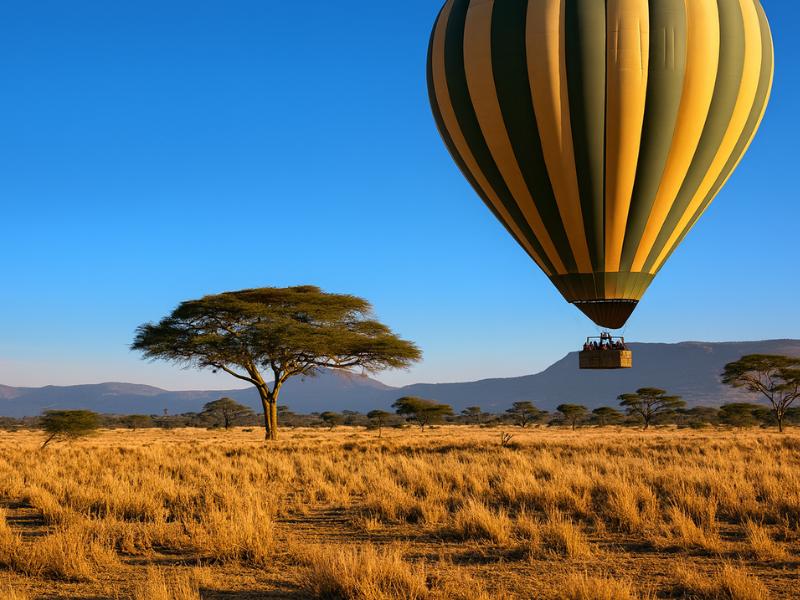
A hot air balloon safari is a one-hour sunrise flight over the Mara plains in a shared or private basket, followed by a champagne breakfast cooked in the bush. Shared flights cost $450-$600 per person and run every morning, weather permitting. For most travelers who do it, it becomes the morning they remember longest from their entire Kenya trip.
The honest version: this is not a game drive from the air. You cannot steer toward an animal. You cannot ask the pilot to stop. You go where the wind goes, and that unpredictability is actually most of the point.
What you get is something no vehicle can give you. Scale. The Mara from 1,000 feet up stops being a park and starts being a landscape – a river system you can follow, migration herds that stretch to the visible horizon, elephant families whose pathways only make sense from above. You also get silence. Not the relative quiet of a vehicle engine off, but actual silence, broken only by the occasional hiss of the burner and the distant calls of animals below.
Whether it’s worth $500+ depends entirely on what you want from it. If you need a high-probability close-up wildlife encounter, your game drives will deliver better returns per dollar. If you want the single image of the Mara that you’ll carry for twenty years, the balloon is the one.
What Does The Experience Actually Feel Like – From The Pre-Dawn Wake-Up To Landing?
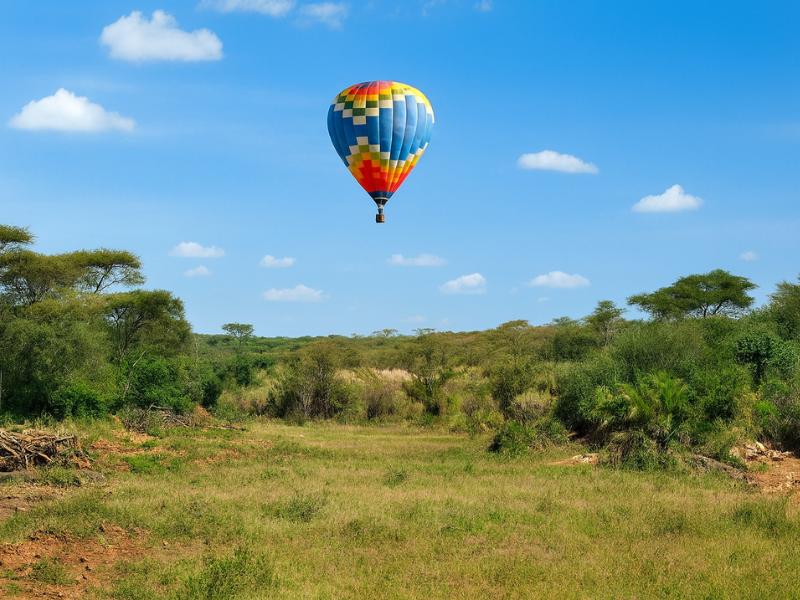
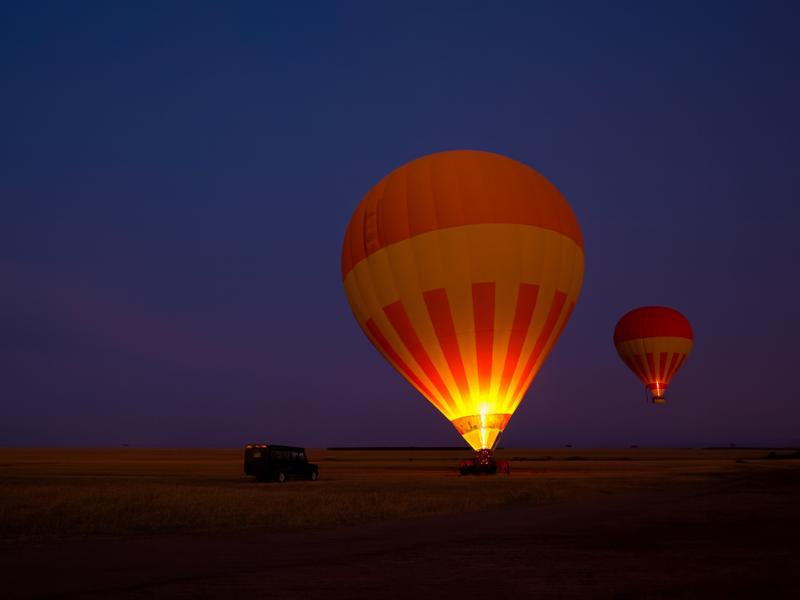
Pickup runs between 4:30 and 5:00 AM, the drive to the launch site takes 20-40 minutes depending on your camp’s location, and the balloon inflates on the ground as you watch with a coffee in hand. Takeoff is around 6:15 AM. The flight is 45-60 minutes. After landing, a full bush breakfast is set up wherever the wind dropped you, and a game drive returns you to your camp by 9:30-10:30 AM.
The pre-dawn drive is its own thing. The headlights cut across grass that hasn’t been touched yet, and you sometimes catch jackals or hyenas in the beam before the other vehicles are out. There is a particular quality to the Mara at 5 AM that you miss entirely on the standard morning game drive. The air is cold enough to make you grateful for the layers you were told to bring.
At the launch site, the envelope is already laid out flat across the ground when you arrive, crew moving around it with headlamps. Ground fans start to fill it with cold air while you go through the safety briefing. Then the burners ignite, and the thing slowly rises upright. Watching a 16-person balloon come to life from the ground up is genuinely dramatic. The burner is loud and hot when it fires, and then everything goes quiet.
The basket is divided into four compartments, with three to four passengers each and the pilot in the center. Walls are chest-high, with rope handles for the landing. The lift is so gradual you almost don’t register leaving the ground. One moment the grass is at your feet, and then you look down and you’re above the tree line, and nobody said anything.
Altitude varies constantly throughout the flight. A good pilot drops to 10-30 feet above the ground when animals are below, then climbs to 300 feet or higher for landscape perspective. The balloon covers 8-25 kilometers total depending on wind speed. You land where the wind decides. About half of all landings are “tip-over” landings where the basket drags briefly on its side before stopping – it sounds alarming and is entirely normal. The crew reaches you within minutes.
Breakfast is set up in whatever open area the team can reach. Tables, proper linens, freshly cooked eggs, Kenyan coffee, fruit, pastries, and champagne. Sitting out there, miles from any camp in no particular direction, having a full hot breakfast, is one of those moments that feels slightly unreal in retrospect.
Questions about what’s included in your specific booking? The Maasai Mara balloon safari with champagne breakfast listing shows the flight, breakfast, and return transfer so you can compare it with what your camp quoted.
Want to get the planning right? This breakdown of how to plan a Maasai Mara safari tours covers all the details most people only figure out after they’ve already made expensive mistakes.
When Is The Best Time Of Year For A Hot Air Balloon Safari In Maasai Mara?
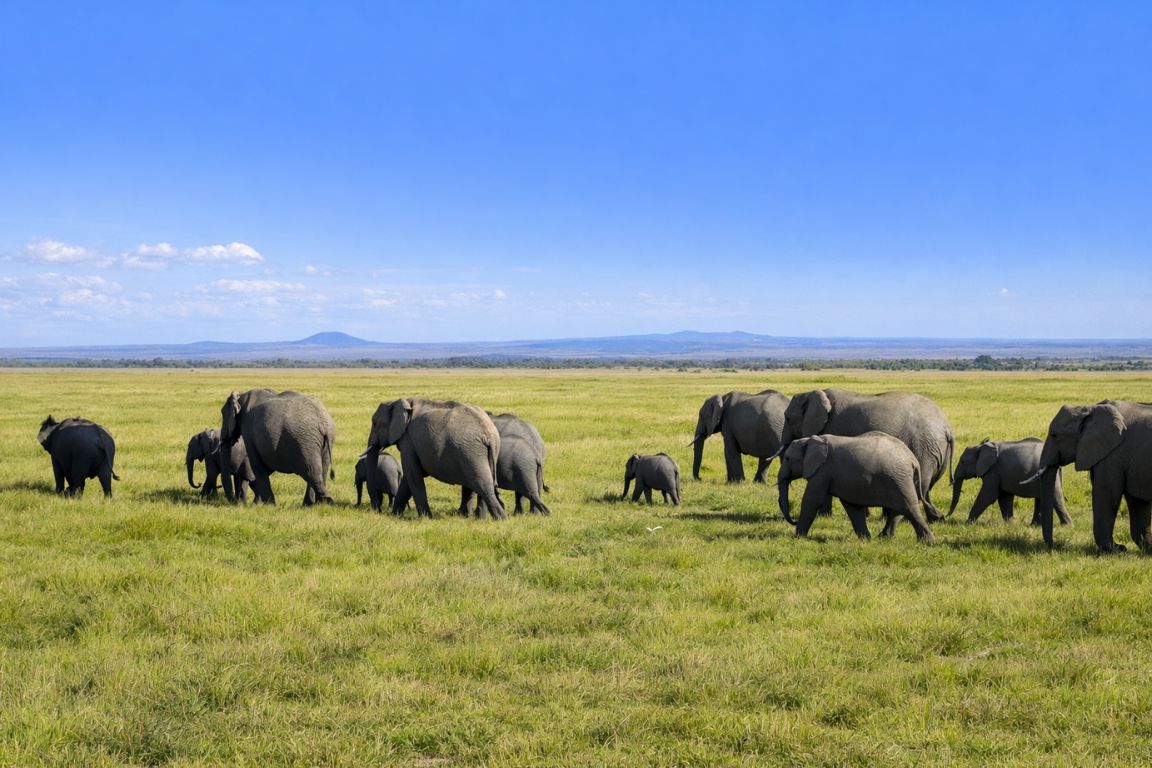 Balloon safaris operate year-round and the Mara’s equatorial position means mornings are flyable most days. July through October gives you the Great Migration underneath, which means herds that can cover the plains from horizon to horizon. December through February offers clear skies, green landscapes, and young wildlife. The long rains in April and May bring the highest cancellation risk, though flights often still go up.
| Jan-Feb | Clear, dry, excellent visibility | Newborns, predator activity, lush green plains | Shoulder season; good value, fewer vehicles |
| Mar-May | Long rains, highest cancellation risk | Lush landscapes, dramatic cloudscapes | Low season; lowest rates, mornings often still flyable |
| Jun-Jul | Dry, cooler, excellent | Early migration herds arriving from Serengeti | Book 3-4 months ahead; crowds building |
| Aug-Sep | Peak dry season, minimal cancellations | Full migration, river crossings, massive herds | Book 4+ months ahead; sells out earliest |
| Oct | Dry, still excellent | Late migration, strong predator activity | Good availability again as peak crowd thins |
| Nov-Dec | Short rains; mostly fine mornings | Plains greening, good resident wildlife | Shoulder value; dramatic morning light |
One thing worth saying plainly: the Mara is rarely a bad day for a balloon flight. Kenya sits on the equator and mornings are consistently calm. The cancellation rate for weather is genuinely low compared to other balloon destinations. Most guests who get cancelled have the misfortune of a single-day visit. If you have two or more mornings available, the odds are very much in your favor.
The time of year you pick completely changes your safari. This breakdown of the best time to visit Maasai Mara safari tours shows you exactly what to expect throughout the year.
How Much Does A Hot Air Balloon Safari In Maasai Mara Cost?
Shared balloon flights run $450-$600 per person and include the flight, champagne breakfast, and transfer back to your camp. Private baskets start around $1,500 for a 4-person balloon. Most operators charge higher rates during July-October peak season. Booking directly through your camp or a trusted operator typically gets the same rate as booking independently.
| Shared flight (adult) | $450-$530 | $550-$600 | Includes flight, breakfast, transfer |
| Shared flight (child 8–15) | ~$330 | ~$330 | Minimum age 7-8; minimum height 1.2m |
| Private 4-person basket | $1,500-$2,000 | $2,000+ | Best for couples, honeymoons, photographers |
| Private 12-person basket | ~$5,040 | ~$5,880 | Good for large groups or exclusive family bookings |
| Private 16-person basket | ~$6,720 | ~$7,840 | Full exclusive morning; all-or-nothing booking |
| Pilot/crew tip (optional) | $10-$20 pp pilot; $5-$10 pp crew | Same | Appreciated, not required |
Prices verified March 2026. Rates vary by operator and camp location; confirm at booking.
One thing people miss when budgeting: the balloon flight happens in the middle of your safari morning. You’re not losing a game drive, you’re replacing the morning game drive with something different. The afternoon drive is untouched. So the real cost question isn’t “$550 for one hour of flight” – it’s “$550 for a different kind of morning.” That framing changes things.
Low season (April to early June) sometimes brings discounts of 10-20% from operators looking to fill baskets. If your travel dates are flexible and the migration isn’t your primary goal, visiting during shoulder season with a balloon flight is genuinely good value.
We’ve got Maasai Mara safari costs explained in detail because safari pricing is deliberately confusing and knowing what’s included makes a huge difference.
Which Balloon Safari Operator Should You Choose In Maasai Mara?
There are five main licensed balloon operators in the Mara. All hold Kenyan Civil Aviation Authority certification and maintain strong safety records. The main differences are launch site location, basket sizes, and flight path. Your best operator is often the one whose launch site is closest to your camp, which reduces the pre-dawn transfer time and keeps your sleep disruption manageable.
The oldest operation in Kenya is Balloon Safaris Ltd., which flew its first passengers in 1976 out of Keekorok Lodge. Founded by filmmaker and naturalist Alan Root, it holds the distinction of having introduced hot air ballooning to the entire continent. Governors’ Balloon Safaris launched operations in 1978, pioneering the Mara River flight path from Little Governors’ Camp that remains widely regarded as the most scenic route in the reserve. Hot Air Safaris (Africa Eco Adventures) has been flying since 1994 and operates the largest fleet in the Mara, with eight balloons ranging from 4-person to 16-person capacity. Adventures Aloft covers multiple launch sites across the reserve and is often the best match for camps in the eastern Mara. Skyship Balloon Safaris operates smaller baskets out of the Mara Triangle, which suits travelers wanting a less crowded basket.
All five operators are legitimate. The question worth asking your camp is which one picks up from your specific location, because a 20-minute transfer beats a 45-minute one when the alarm is going off at 4:30 AM.
| Balloon Safaris Ltd. | 1976 | Central reserve (Keekorok) | 12, 16-person | History, central Mara camps |
| Governors’ Balloon Safaris | 1978 | Little Governors’ Camp, Mara River | 8, 12, 16-person | Mara River flight path, river-side camps |
| Hot Air Safaris | 1994 | Multiple sites across reserve | 4, 8, 12, 16-person | Largest fleet; private basket options |
| Adventures Aloft | Est. | Siana Springs, Fig Tree, eastern Mara | 12, 16-person | Eastern reserve camps, Talek area |
| Skyship Balloon Safaris | Est. | Mara Triangle | Smaller baskets | Intimate experience, Triangle camps |
Operator choice often comes down to launch site and basket size. Compare a hot air balloon flight with champagne breakfast against your camp’s pickup point before you lock in a morning.
Overwhelmed by choices? Check out our breakdown of the best Maasai Mara safari tours – it cuts through the marketing hype and shows you what each operator really offers.
What Should You Know Before You Go – Preparation, Restrictions, And What To Bring?
Bring layers you can remove as the sun rises, closed shoes for landing in grass, a camera with a zoom lens on a strap, and nothing else bulky. Minimum age is 7-8 depending on operator, with a minimum height of 1.2 meters. Pregnant passengers and those with serious cardiac or back conditions should not fly. If you weigh over 120 kg (265 lbs), notify the operator before the flight.
The cold is real. At 5 AM the Mara is genuinely cold, sometimes near 10°C (50°F), and the balloon basket has no windbreak. A fleece and light jacket are not optional. The good news is that once the sun clears the horizon you’ll be peeling them off within 20 minutes, so packing layers you can stuff into a small bag makes sense.
On photography: the instinct is to bring the longest lens you own. Resist it. At low altitude close to animals, a long telephoto is too tight to frame anything useful. At high altitude for landscapes, you want wide. Most experienced balloon photographers recommend a versatile zoom in the 24-200mm range on a mirrorless body. Keep your camera on a strap. Keep the strap on your wrist. The basket tips on landing and dropping gear into tall grass is not recoverable.
One detail almost nobody mentions in advance: the basket compartments are small. You’re standing with 2-3 other people for an hour, shoulder to shoulder. People who experience claustrophobia in small spaces should think about this. Most guests don’t notice it at all once the views start, but it’s better to know beforehand than to feel surprised. A private 4-person basket solves this entirely if it’s a concern.
There are no restrooms on the balloon. Use the facilities at your camp before pickup and again at the launch site if available. The flight is an hour and breakfast runs another 45 minutes, so a 2+ hour gap is realistic.
How Does A Balloon Safari Compare To A Morning Game Drive?
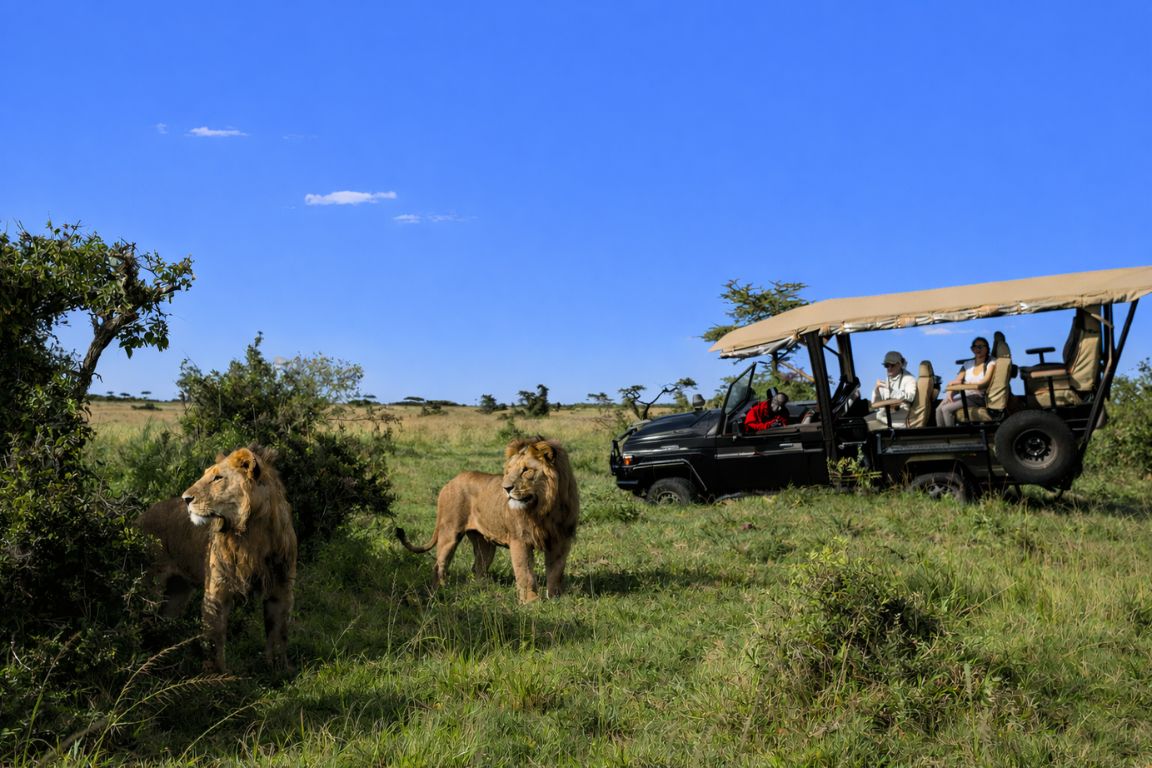 A game drive gives you proximity, flexibility, and the ability to track animals over time. A balloon gives you perspective, silence, and a sense of the Mara’s scale that no vehicle can replicate. They are not substitutes for each other. The balloon safari is best understood as a completely different kind of experience that happens to take place on the same landscape.
| Wildlife proximity | Moderate; dependent on wind and altitude | High; driver can position within meters |
| Wildlife behavior | Undisturbed; animals rarely react to balloon above | Some animals adjust behavior near vehicles |
| Photography | Best for landscapes, herd scale, aerial perspective | Best for close-up animal portraits and action |
| Control | None – wind directs the flight | High – driver tracks and responds |
| Scale of landscape | Exceptional – the full Mara becomes visible | Limited to visible horizon from vehicle |
| Silence | Near-complete between burner firings | Engine noise present throughout |
| Duration | 1-hour flight, 5-hour total morning | 3-5 hours, flexible |
| Cost | $450-$600 per person | Included in most safari packages |
The one thing I’d add from having watched a lot of travelers come back from both: game drive photos tend to be technically better. The balloon produces a smaller percentage of usable wildlife shots because of distance and movement. But the balloon images people actually print and frame are almost always the wide landscape ones – the one where the sun is just clearing the horizon and five herds are visible at once, the shot where the Mara River snakes through the frame with 200 hippos in the oxbow below. That photo doesn’t happen from a vehicle.
What Are The Most Common Mistakes Travelers Make With The Balloon Safari?
The three most common regrets are booking too late (sold out for their dates), going with only one morning available (no backup if weather cancels), and expecting it to replace a game drive for wildlife spotting. The people who get the most out of it go in understanding what it actually is – a landscape and perspective experience – rather than hoping it delivers what a vehicle does better.
From Our Travelers: What Maasai Mara Safari Tours Clients Report About the Balloon Experience
| Travelers who called it the highlight of their Mara trip | 75-85% |
| Travelers who said they wish they’d booked a private basket | 35-45% |
| Travelers who had a weather cancellation (in 12 years of bookings) | 3-8% |
| Travelers who went during migration (Jul-Oct) who saw herds from the air | 85-95% |
| Travelers who said the bush breakfast alone was worth getting up for | 65-80% |
Four mistakes come up repeatedly across our travelers and the wider conversation in safari forums.
Booking the morning after arrival. The temptation is to do the balloon on day two. The problem is that day two is often when people are most jet-lagged, and more importantly, it leaves no room to reschedule if weather cancels. If the balloon matters to you, build in a two-morning window.
Expecting to steer toward interesting animals. The pilot adjusts altitude to find different wind directions and can influence the general path, but this is not a vehicle. You cannot say “there’s a lion, can we circle back.” The wind goes where it goes. Travelers who understood this before the flight universally loved it. A handful who expected controlled animal tracking were disappointed, not because the flight was bad but because their expectation was wrong.
Bringing too much gear. Large bags are not permitted in the basket. A camera, a phone, and a small personal item is what fits. People who bring a full camera bag, tripod, or large backpack cause problems at the launch site and usually end up leaving things with the ground crew anyway. Travel light.
Not tipping the crew. The pilots and ground crew work from before 4 AM to set up, inflate, fly, pack down, and drive you back to camp. The $10-$20 tip for the pilot and $5-$10 for crew is not mandatory but it matters to people who are genuinely skilled at what they do and working hard for it.
Planning a Mara safari that includes a balloon flight? A 3-day Maasai Mara safari with a hot air balloon ride already builds the flight into the itinerary, which leaves more than one morning in camp if weather grounds the balloon.
Frequently Asked Questions
What is included in the price of a Maasai Mara balloon safari?
All shared flight prices include the one-hour flight, champagne breakfast in the bush, transfers to and from the launch site, and return game drive to your camp. Park fees may be additional depending on the operator and whether your lodge is inside the reserve.
Is it safe to do a hot air balloon safari in Maasai Mara?
Yes. All commercial balloon operators in Kenya hold Civil Aviation Authority certification, and licensed pilots undergo annual checks. Kenya’s equatorial calm mornings make it one of the most consistently flyable balloon destinations in the world. The main operators have safety records spanning 45-50 years of continuous operation.
What happens if the balloon safari is cancelled due to weather?
Reputable operators offer a full refund if the flight cannot go ahead due to wind or rain. Some offer a reschedule to the next available morning if space permits. Confirm the cancellation and refund policy at the time of booking, not after.
Can children do a hot air balloon safari in Maasai Mara?
Most operators allow children aged 7-8 and above, provided they meet a minimum height requirement of 1.2 meters (to safely see over the basket wall and stand for the duration). Children under 8 are generally not permitted. Pregnant passengers are advised not to fly due to the landing dynamics.
Is it worth doing a balloon safari outside the Great Migration season?
Yes, genuinely. The landscape itself is spectacular year-round. Outside of July to October you’ll still see elephants, lions, giraffe, hippos, and buffalo from the air. The green season months (January to February, November) produce some of the most dramatic skies and light. The migration adds a layer but it’s not the only reason to go up.
How far in advance should I book a Maasai Mara balloon safari?
For July and August, book 4 months or more ahead – flights sell out completely during peak migration. For other months, 2-3 months is a safe buffer. If you’re booking last-minute for non-peak dates, call directly rather than assuming online availability reflects reality.
Written by Zara Akinyi Omondi
Kenyan tour guide since 2012 · Founder, Maasai Mara Safari Tours
Zara has guided over 2,500 travelers through Maasai Mara and Kenya’s premier safari destinations since founding the agency.